Which Fujifilm camera to buy in 2026: the full lineup
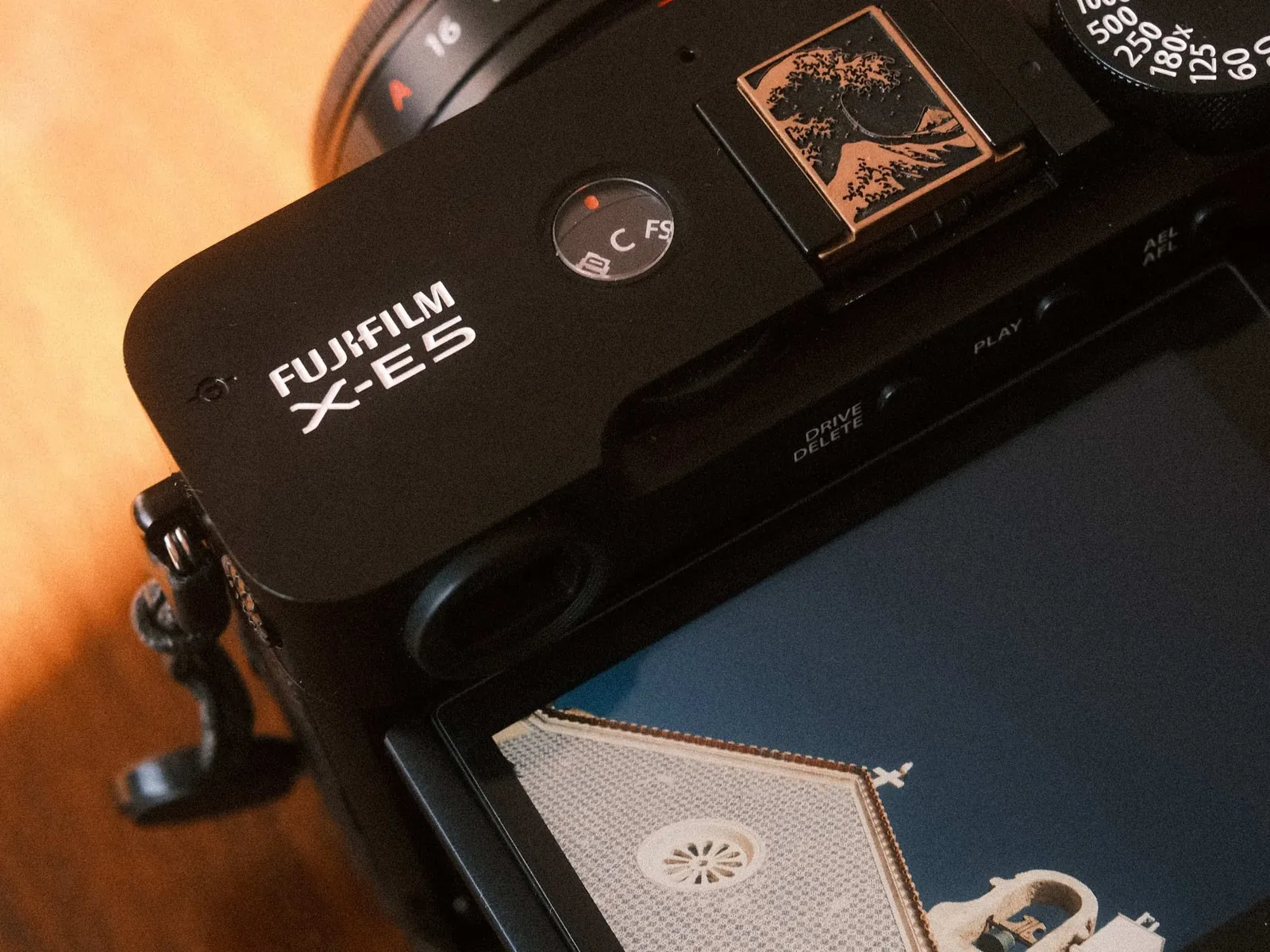
Choosing a Fujifilm camera in 2026 requires navigating a large catalog of models with overlapping specifications. The brand built its current reputation on physical tactile controls and in-camera film simulations. These color profiles replicate the look of analog film stocks like Provia, Velvia, and Classic Chrome, allowing users to get usable JPEG files straight out of the camera without spending time editing raw files on a computer.
The lineup is now divided across several form factors. You have the X-T series shaped like traditional SLRs, the X-E series styled like rangefinders, the X-H series built for heavy professional workloads, and the fixed-lens X100 series. Buyers have to decide between the older 26-megapixel sensors and the newer 40-megapixel sensors. They also need to determine if they need in-body image stabilization, or IBIS, which shifts the sensor to compensate for hand movement during slow shutter speed exposures.
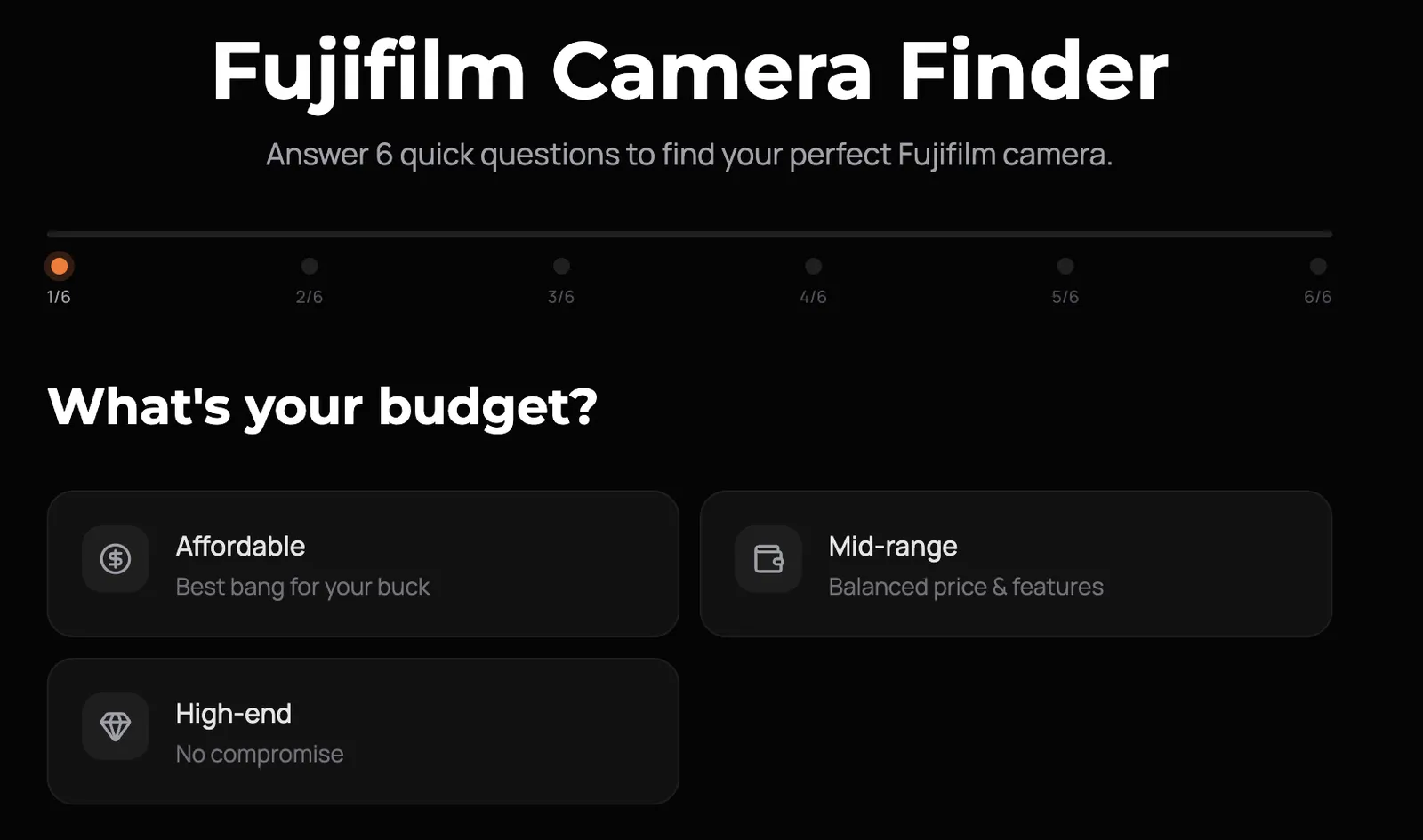
If you want to skip the technical reading and get a direct recommendation, I have a free tool, named camera finder here, that asks you a few questions about your budget and shooting style to find the right model. Otherwise, here is a breakdown of the current market.
The 2026 Fujifilm lineup at a glance
Every current X series body, side by side. Scroll sideways on a phone.
| Model | Sensor | IBIS | Viewfinder | Body | Best for |
|---|---|---|---|---|---|
| X100VI | 40MP | Yes | Hybrid OVF + EVF | Fixed 23mm f/2 | One camera, one lens, street |
| X-E5 | 40MP | Yes | Corner EVF | Rangefinder, flat top | Compact carry with lens choice |
| X-T50 | 40MP | Yes | Centre EVF | Small SLR shape | Travel, film simulation dial |
| X-T5 | 40MP | Yes | Centre EVF, large | Weather sealed, dual slots | Serious stills work |
| X-H2 | 40MP | Yes | Centre EVF, large | Deep grip, PASM dial | High resolution and video |
| X-H2S | 26MP stacked | Yes | Centre EVF, large | Deep grip, PASM dial | Sports, wildlife, fast action |
| X-S20 | 26MP | Yes | Centre EVF | Deep grip, vari-angle screen | Video and hybrid shooting |
| X-T30 III | 26MP | No | Centre EVF | Small SLR shape, light | Best value new body |
| X-M5 | 26MP | No | None, screen only | Smallest current body | Vlogging, pocket second body |
Two columns in that table decide most purchases: the sensor and the IBIS column. The rest is ergonomics, and ergonomics is personal. I go through both properly further down, after the model by model breakdown.
The everyday carry options
The X100VI is the most recognizable camera in the current lineup. It has a fixed 23mm f/2 lens, a 40-megapixel sensor, and built-in IBIS. It also includes a leaf shutter and a built-in ND filter. The leaf shutter allows you to synchronize an external flash at very high shutter speeds. The ND filter lets you shoot at a wide f/2 aperture even in bright daylight. It is an excellent camera for daily use and street photography. It remains difficult to find in stock at retail price.
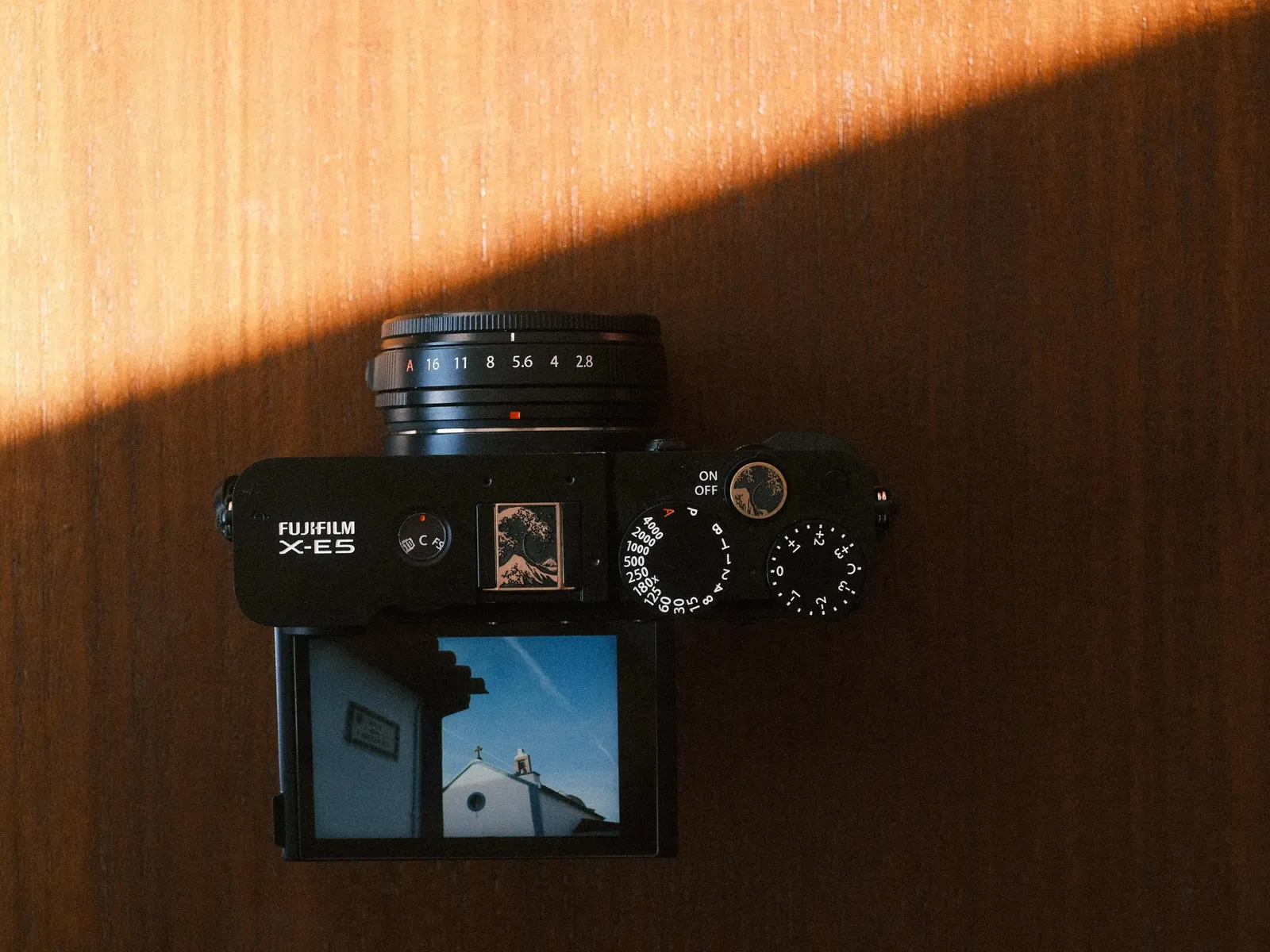
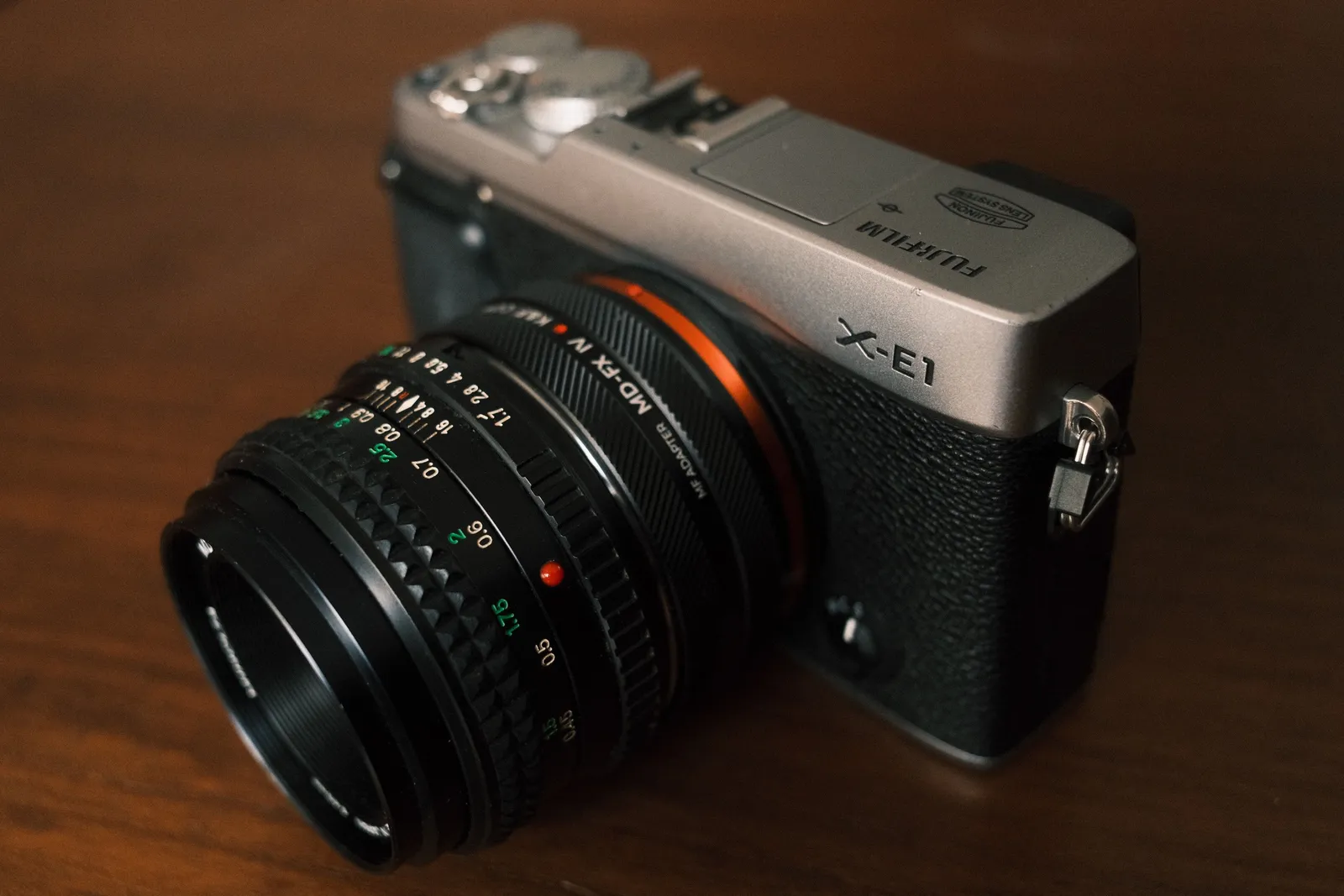
The alternative is the X-E5. I have a long history with the X-E line. I started with an X-E1 12 years ago. The X-E1 had beautiful color output but was incredibly slow to focus. I currently shoot with the X-E5 (I wrote about it here), and it resolves all the performance issues of the older generations. It uses the same 40-megapixel sensor and IBIS system as the X100VI, but it allows you to change lenses. When I mount the Fujifilm 23mm f/2.8 pancake lens on my X-E5, the physical size is almost identical to an X100VI. The advantage of the X-E5 is flexibility. If I want to shoot a portrait, I can take off the 23mm and attach my 35mm 1.4. The camera retains the flat, rangefinder-style top plate, making it very easy to slide into a small bag.
The mid-range bodies
The X-T50 is the primary option for users who want a camera with interchangeable lenses, IBIS, and the classic SLR shape with a center viewfinder. It has a dedicated film simulation dial on the top plate. This dial allows you to physically switch between color profiles like Reala Ace and Nostalgic Neg without opening the digital menus. It is a good choice for travel photography.
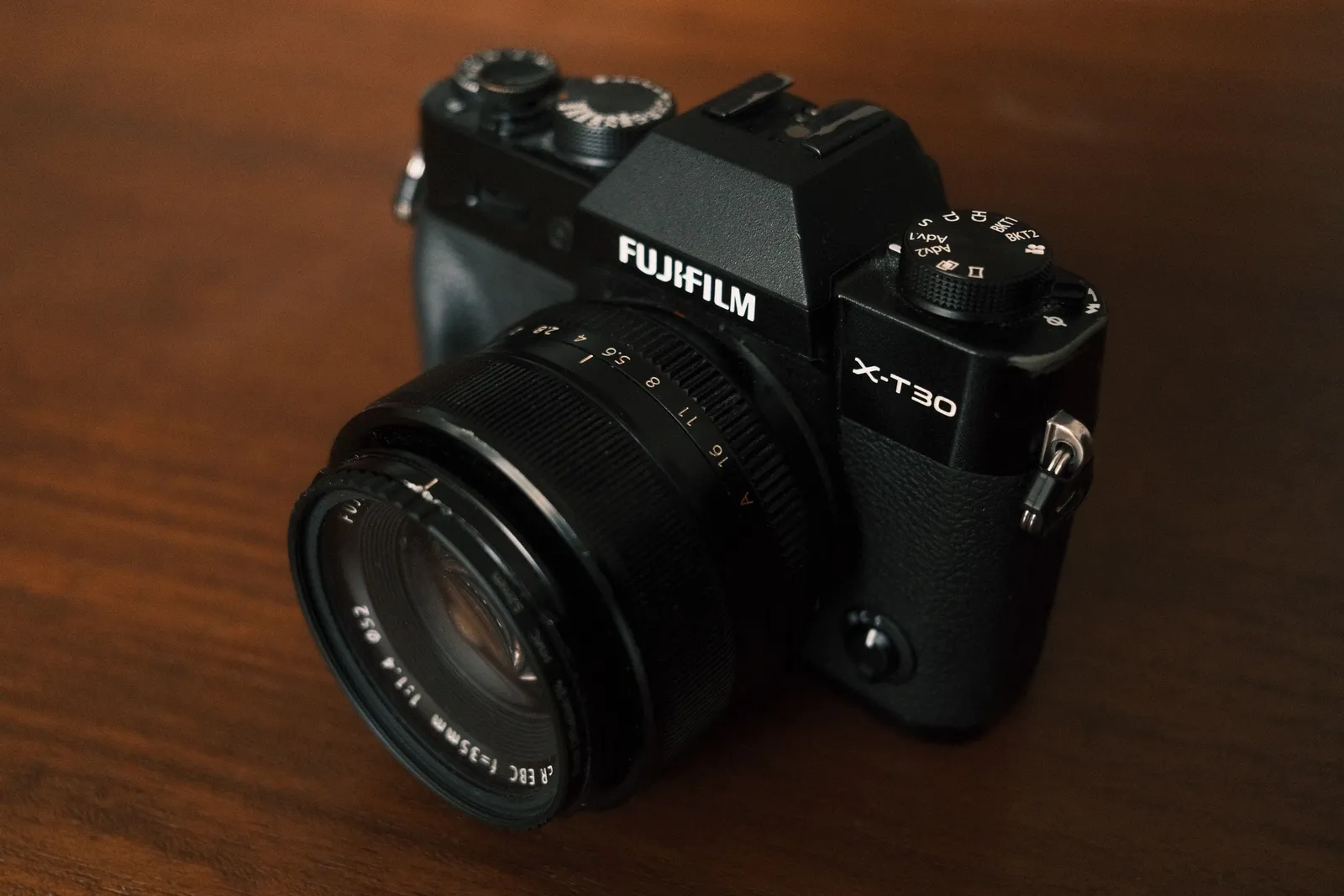
The X-T30 III is the budget alternative in this category. It skips the IBIS system and keeps the older 26-megapixel sensor. I used the previous generation, the X-T30II, extensively (I wrote about it here). The lack of IBIS was not a big deal for my style of photography, but was missing it when I tried some handheld video footage. However, the camera is incredibly light. I could carry it on a neck strap all day without feeling the weight. The 26-megapixel files are also smaller and easier to store on a hard drive compared to the 40-megapixel files from the newer sensors. The X-T30 III maintains this lightweight philosophy and is a logical choice for someone who wants to spend less on the camera body and more on lenses.
Workhorses for serious photographers
The X-T5 is designed for users who want high-end photography specifications in a retro body. It includes a 40-megapixel sensor, weather sealing against dust and moisture, dual SD card slots for instant file backups, and a large electronic viewfinder. It uses a tilt screen rather than a fully articulating screen. The screen tilts up, down, and to the side, but it stays aligned with the lens axis. Many photographers prefer this mechanism because it makes shooting from the hip more intuitive.
The X-H2 and X-H2S move away from the retro dials entirely. They use a standard PASM dial (Program, Aperture, Shutter, Manual) found on most digital cameras. They have a deep grip designed to balance large, heavy lenses like the 150-600mm zoom. The X-H2 has a 40-megapixel high-resolution sensor. The X-H2S has a 26-megapixel stacked sensor. The stacked sensor in the X-H2S reads data much faster, virtually eliminating the "rolling shutter" effect where fast-moving subjects look warped. These two cameras are built for sports photography, wildlife, and professional video production.
Starting light and the vlogging market
The X-M5 is the smallest camera in the current lineup. It lacks an electronic viewfinder entirely. You compose all your shots using the rear LCD screen, much like a smartphone. It is heavily targeted at video creators and people who want a secondary camera that fits in a coat pocket. The body is so small that mounting a large lens like the 16-55mm f/2.8 makes it completely unbalanced and difficult to hold. It pairs best with small prime lenses like the 16mm f/2.8 or the 35mm f/2.
The used market
Buying a used, older generation Fujifilm camera is a common approach for beginners. The older sensors still produce excellent images.
The X-T2 is available for a fraction of its original price. It was one of the last models manufactured in Japan, and it has a reputation for durability. It uses a 24-megapixel sensor. It is an excellent tool for learning manual exposure because it has dedicated physical dials for ISO, shutter speed, and exposure compensation. You can look at the top of the camera while it is turned off and know exactly what your settings are.
The X-T3 and X-T4 are the next steps up. The X-T3 introduced a 26-megapixel sensor with vastly improved autofocus compared to the X-T2. The X-T4 took that same sensor and added IBIS and a larger battery. The NP-W235 battery in the X-T4 lasts nearly twice as long as the older NP-W126S battery used in the X-T2 and X-T3. If you do not want to pay retail price for an X-T5 but you absolutely need image stabilization, a used X-T4 is the most practical choice. You can check the camera finder here to see if your specific budget aligns better with these used options or a new entry-level body.
26 or 40 megapixels?
The intro promised I would come back to this, so here it is. The honest answer is that the 26-megapixel sensor is enough for almost everyone, and the 40-megapixel sensor costs you something real in exchange for detail you will usually never look at.
A 26-megapixel file prints comfortably at A3. It holds up to a moderate crop. It is around half the file size of a 40-megapixel raw, which matters more than people expect once you have a few years of archives on a drive.
The 40-megapixel sensor earns its place in two situations. If you crop hard, either because you shoot wildlife with a lens that is never long enough or because you reframe a lot in post, the extra pixels are real headroom. If you print large, past A2, the difference becomes visible.
It also asks more of you. Camera shake and focus error that a 26-megapixel sensor would have hidden are recorded plainly at 40. Soft lenses look softer. You need faster storage, and the files are slower to move around.
If you shoot straight-out-of-camera JPEGs, as I do, the resolution difference is close to irrelevant to the final image. I would put the money into a better lens before a higher pixel count.
Do you need IBIS?
In-body image stabilisation shifts the sensor to cancel out hand movement, which buys you sharp frames at shutter speeds where you would otherwise get blur.
You want it if you shoot handheld indoors or after dark, if you shoot handheld video at all, or if you use longer focal lengths. Handheld video is the case where its absence is hardest to work around, and it is the one thing I genuinely missed on the X-T30 II.
You can live without it if you shoot mostly in daylight, mostly at wider focal lengths, and mostly stills. A 23mm or 35mm lens in decent light sits at a shutter speed fast enough that stabilisation never comes into play. Skipping IBIS is also the single biggest saving available in the lineup: it is most of the gap between an X-T30 III and an X-T50.
What is actually new, and what is only rumoured
The current generation is built on the X-Trans V sensor, which is what the 40-megapixel bodies and the stacked X-H2S use. Fujifilm keeps the full X series lineup on one page if you want to check a specification against the source. The 26-megapixel bodies still in the lineup, the X-T30 III, X-M5 and X-S20, sit on the previous generation and are positioned on price and size rather than specification.
If you arrived here searching for a model that is not in the table above, such as an X-E6 or a new X100, it has not been announced. Fujifilm does not pre-announce, and rumour sites are guessing. Waiting for an unannounced body is usually a way to not take photographs for six months.
The one timing consideration that is real: the X100VI has been supply constrained since launch, so it regularly sells above list price. If that is the camera you want, buying from a dealer waiting list rather than a marketplace is the difference between paying retail and paying a premium.
Common questions
Which Fujifilm camera is best for a beginner?
The X-T30 III. It has the dedicated dials that teach you the exposure triangle by making it physical, it is light enough that you actually carry it, and the money you save on the body buys a better lens. The X-M5 is smaller and cheaper still, but composing on a screen with no viewfinder is a harder way to learn.
Is the X100VI worth it over the X-E5?
Only if you genuinely want to be locked to one focal length. They share the sensor and the stabilisation. The X100VI adds a leaf shutter, a built-in ND filter and a hybrid viewfinder. The X-E5 adds every lens Fujifilm makes. I chose the X-E5 and wrote out the full reasoning.
What is the cheapest way into the Fujifilm system?
A used X-T2 or X-T3 with a 35mm f/2. The older 24 and 26-megapixel sensors still produce the colour that made people want these cameras, and the film simulations are the same ones.
Do I need the 40-megapixel sensor for prints?
Not for anything up to A3, which covers most prints people actually make. I print regularly on a 4x6 dye-sublimation printer and resolution has never been the limiting factor there.
Which one has the film simulation dial?
The X-T50 and the X-M5 have a dedicated physical dial for switching film simulations. On the other bodies you assign simulations to a function button or a custom preset slot. If you shoot JPEG and change looks often, that dial is a genuine workflow difference rather than a marketing line. All of them run the same film recipes.
Help me keep writing
If these articles are useful to you, have a look at what I make.
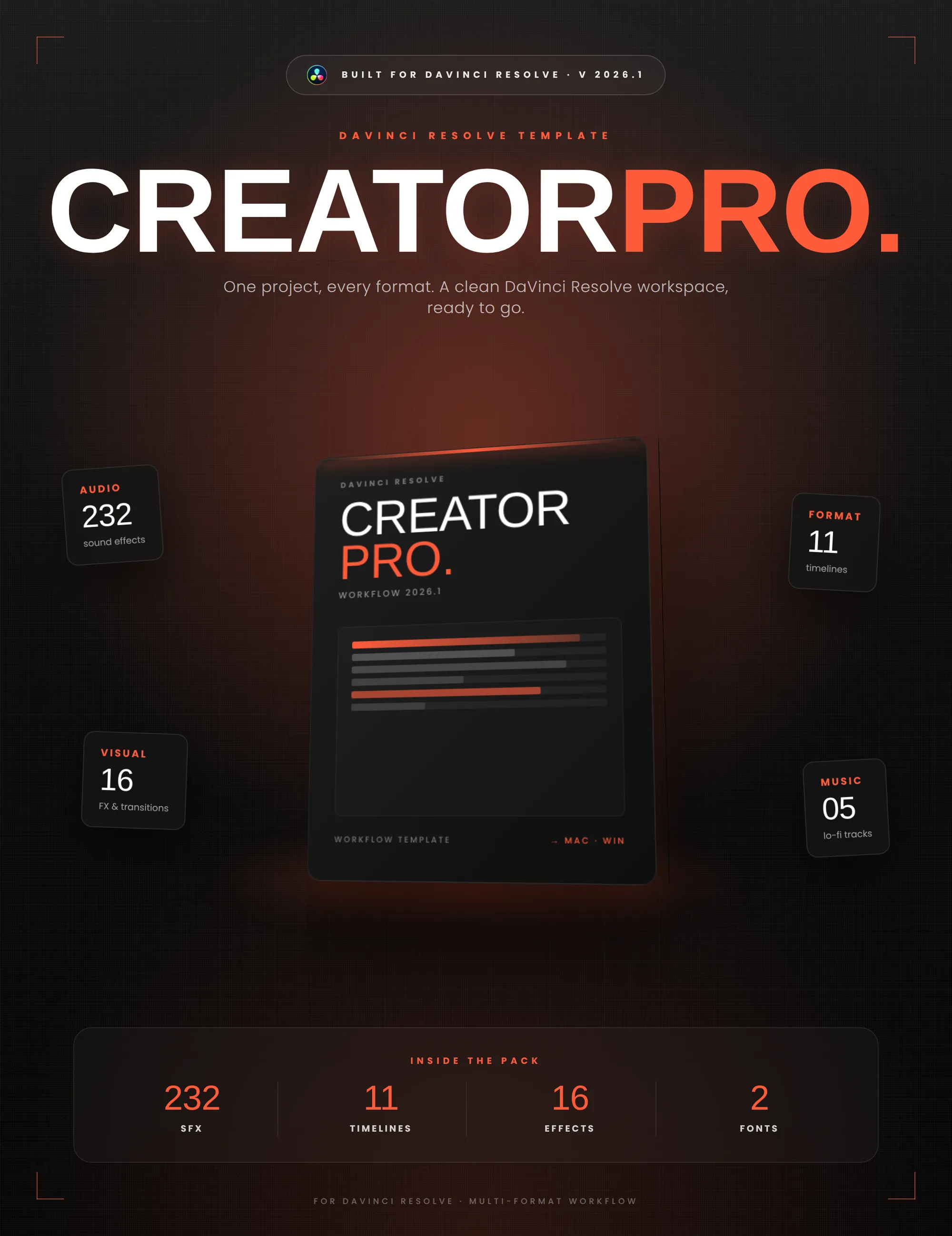
Creator Pro
The ultimate DaVinci Resolve workspace for creators
View plugin — €29.00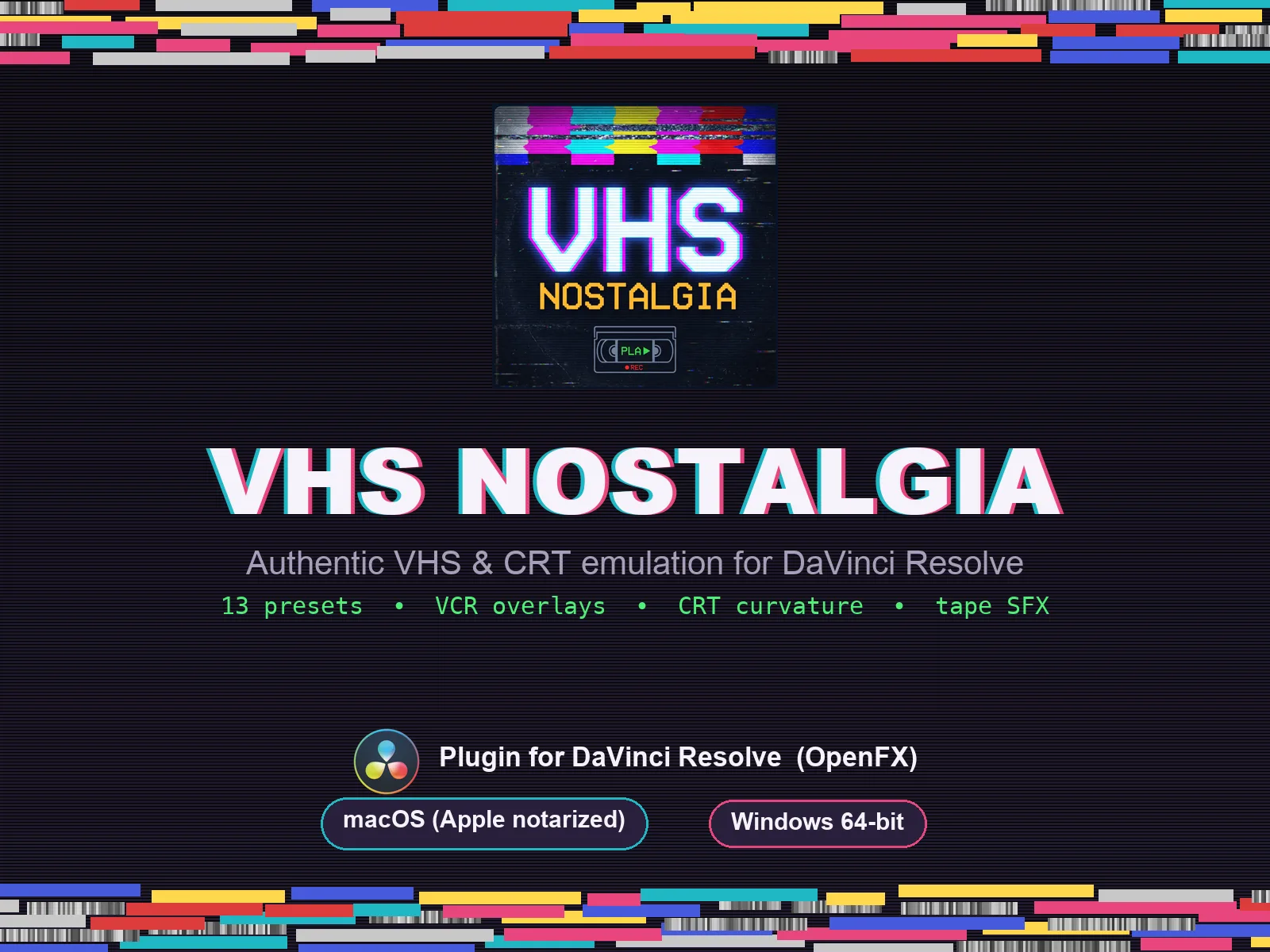
VHS Nostalgia
Real VHS & CRT emulation for DaVinci Resolve
View plugin — €39.00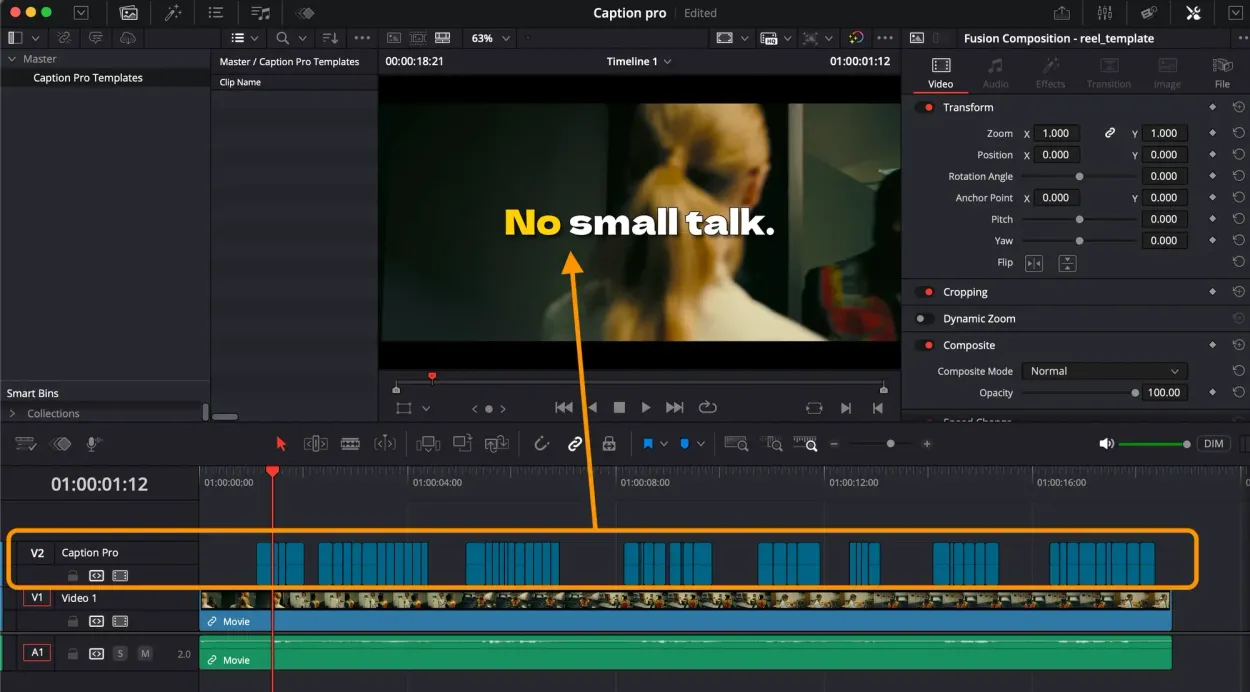
Caption Pro
Automatic word-by-word captions and translation for DaVinci Resolve
View plugin — €29.00
Get the zine
"Absorbed by the algorithm Vol. 1": 33 images shot in Paris, 28 pages, shipped worldwide.