Fujifilm X-T30 II: The Best Value Camera for Hobbyists
For a few years, I stopped carrying a camera.
My smartphone was always in my pocket, light and discreet and improving every year. I took photos on trips, on the street, at dinners with friends. The results were often good enough, and there was no extra bag to carry.
But something was missing.
In 2023, during a trip to Sri Lanka, I borrowed a friend's camera for an afternoon. The moment I held it and looked through the viewfinder, I remembered why I loved photography.
It had little to do with image quality, since smartphones are quite impressive now. What I had been missing was intentionality: the way a dedicated camera makes you slow down, observe, and choose your frame instead of pointing and tapping.
When I got home, I started researching.
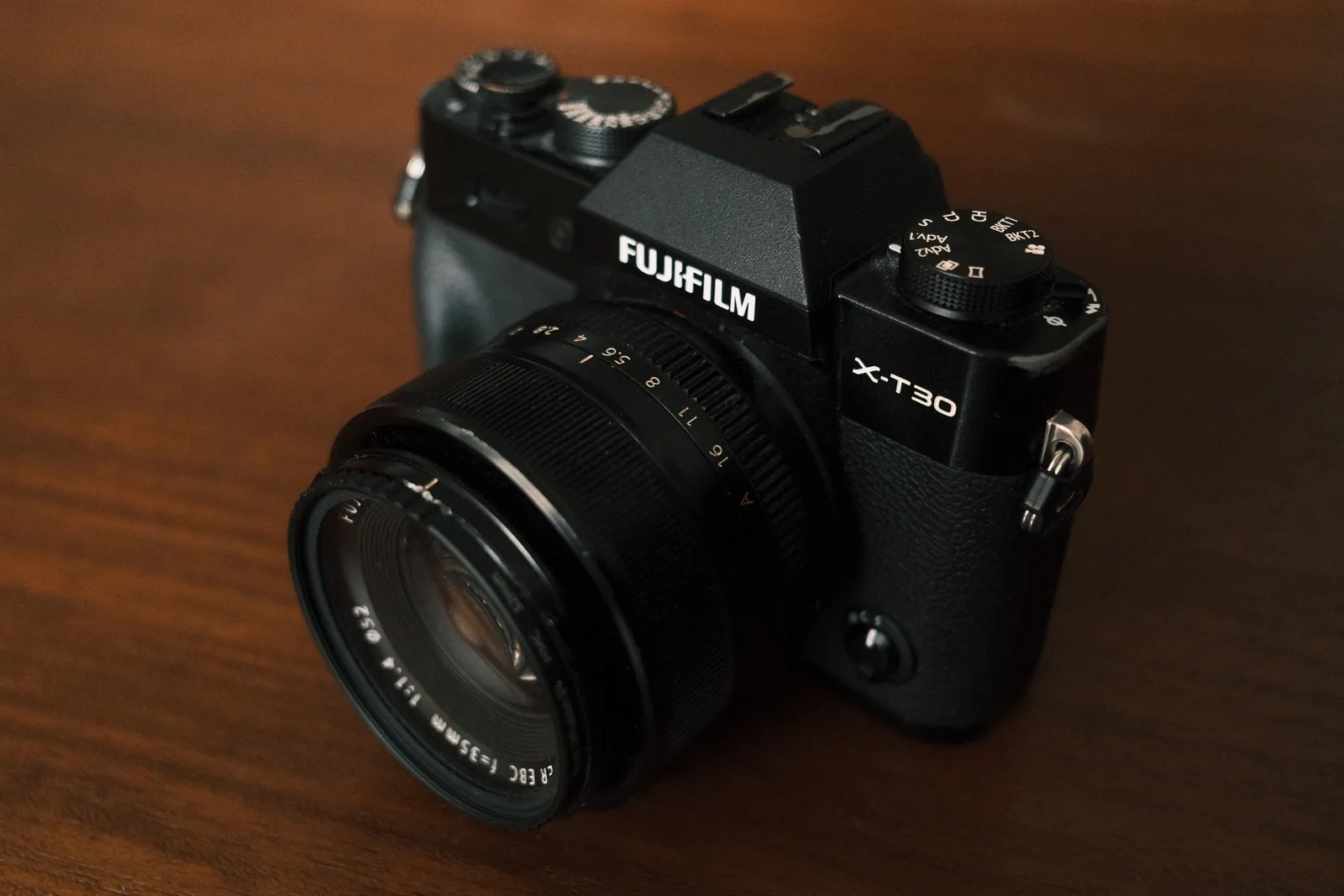
After weeks of comparisons, I bought the Fujifilm X-T30 II in early 2024. Two years later, I have no regrets. For hobbyists who want quality and creative range without paying professional prices, I think it's one of the best choices you can make.
Why I chose it
I had specific needs. Something compact, small enough to carry daily without excuses. Creative features. Quality without paying for professional specs I'd never use. And I wanted to avoid the hype.
The X100 series was everywhere in 2024 with the X100V and then the X100VI. Beautiful cameras, but impossible to find at reasonable prices. Scalpers had taken over. I wasn't interested.
The X-T30 II answered all of it. At 378g with battery, it's noticeably smaller than the X-T5 or X-H2S, so it goes in a bag without a decision. The built-in flash is a small thing, but it gets me fill light in tricky situations without carrying anything extra. Multiple exposure mode goes up to 9 frames with different blending options, which alone has fuelled countless experiments. And I can save custom film recipes and shoot SOOC without ever opening Lightroom. Second-hand prices have stayed stable, with no hype inflation.
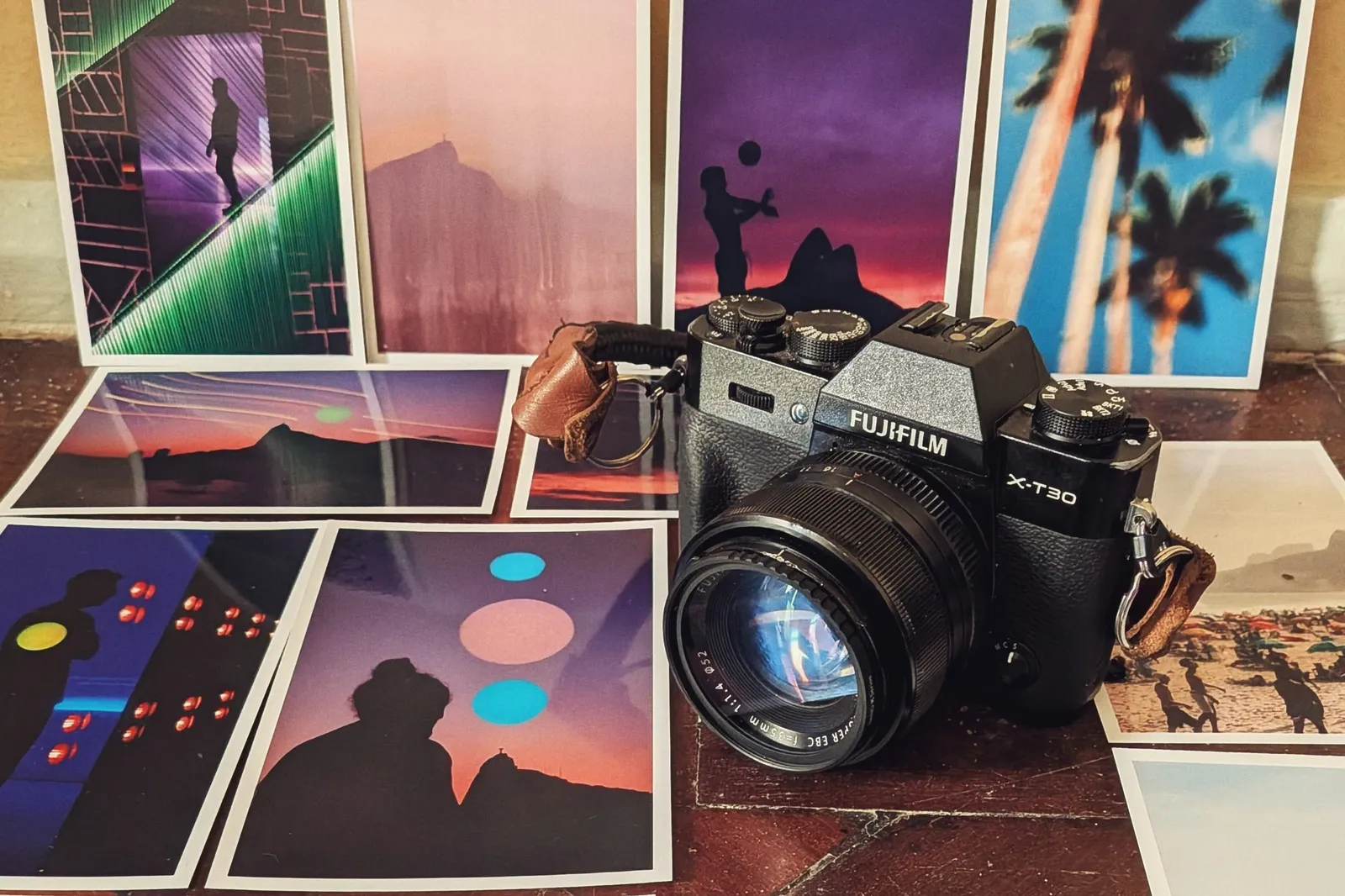
And crucially: I could use my 35mm f/1.4 from 2013, from my X-E1. That lens is slightly slow to focus, but its rendering is beautiful, almost organic, full of character.
The drawbacks
There's no weather sealing. I've shot in light rain and dusty conditions without issues, but I'm careful, and if you need rugged reliability you should look elsewhere.
There's no in-body stabilization either. For photos this rarely matters, at least for me. For video it means a tripod or gimbal if you want smooth handheld shots.
It also isn't a video-first camera. It shoots excellent 4K, but that's the extent of it.
For my use, none of these are dealbreakers.
Key specs
- 26.1MP APS-C X-Trans CMOS 4 sensor : The same sensor as the X-T4.
- X-Processor 4 : Fast, reliable, great color science
- Tilting 3" touchscreen LCD : Helpful for low angles and street shooting
- 4K video at 30fps, 1080p at 240fps : More than enough for hobbyist needs
- 18 film simulations : Classic Chrome, Classic Negative, Provia, Velvia, ACROS, and more
- Multiple exposure mode : Up to 9 frames with Additive, Average, Bright, and Dark blending
It's a lot of camera in a small body.
How it changed my photography
Over two years, the X-T30 II pushed me creatively in ways my smartphone never did.
Multiple exposures became a regular practice: layering textures, combining subjects, experimenting with light. Plenty of results were failures and a few became favourites, and the process itself was fun either way.
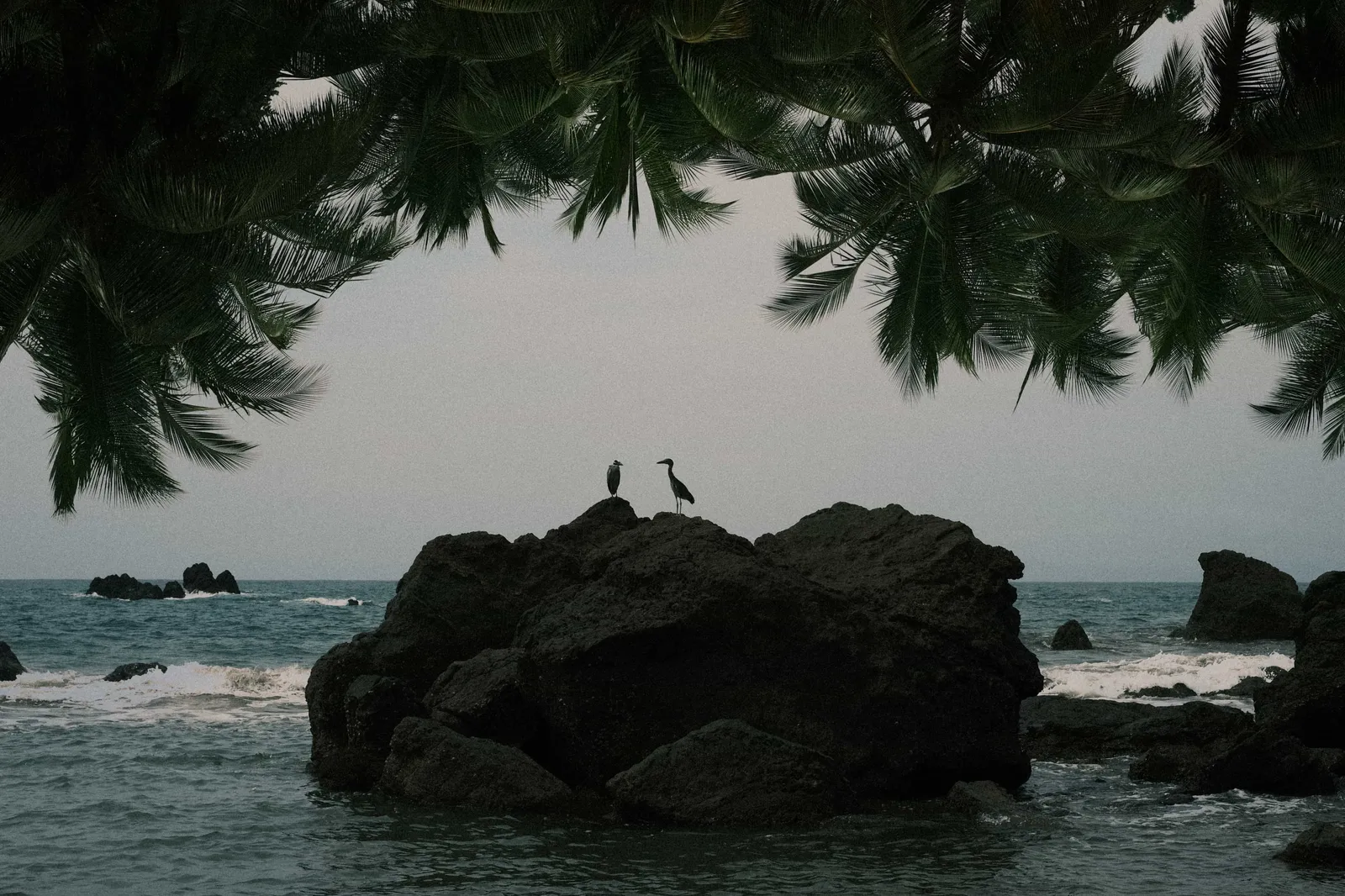
Silhouettes and shadows drew my attention more, and I started working on shapes, contrast, and negative space.
Video surprised me. Shooting with film simulations like Classic Negative, the footage looked beautiful straight out of camera, with no grading needed, though I learned quickly that a small tripod is essential without stabilization.
Beyond the techniques, what the X-T30 II really gave back was the part my smartphone had taken away: the dials, the viewfinder, the slow act of composing, the same things that got me into this back when I had the X-E1 and then the X100S.
How it compares
Vs. smartphones: Image quality is comparable now, but the experience is not. A dedicated camera gives you creative depth and tactile control that phones can't replicate. For capturing memories, a smartphone is fine. If photography is a practice you actually want to spend time on, a camera like the X-T30 II is worth the extra weight.
Vs. X-T5: More expensive, larger, higher resolution. Excellent if you need it. Overkill for most hobbyists.
Vs. X-T4: Similar sensor and processor, but bigger body, higher price. The X-T4 has IBIS, which matters for video. For stills, the X-T30 II is more portable and often cheaper used.
Vs. X-S10: The X-S10 has IBIS and a more traditional grip. The X-T30 II has classic Fuji dials and a smaller footprint. Personal preference.
Vs. the X100 series: Different category. The X100VI is fixed-lens, more expensive, and difficult to find at retail. The X-T30 II offers interchangeable lenses and immediate availability at half the price.

Still worth it in 2026?
Absolutely.
The used market is healthy. Prices range from $650 to $900 depending on condition. For that, you get a camera that produces genuinely beautiful images, offers creative tools most beginners will never exhaust, and feels great in hand.
It isn't the newest or the flashiest body Fujifilm sells, and it doesn't need to be.
Conclusion
Three years ago, I wasn't sure I needed a dedicated camera anymore. Now I can't imagine not having one.
The X-T30 II brought back the joy of intentional photography and pushed me to experiment and slow down, and it did it without any of the hype attached to the more fashionable bodies.
If you're thinking about moving beyond your smartphone, or looking for an affordable entry into Fujifilm's ecosystem, I can't recommend it enough. Check the second-hand market and find one in good condition.
Help me keep writing
If these articles are useful to you, have a look at what I make.
Creator Pro
The ultimate DaVinci Resolve workspace for creators
View plugin — €29.00
VHS Nostalgia
Real VHS & CRT emulation for DaVinci Resolve
View plugin — €39.00
Caption Pro
Automatic word-by-word captions and translation for DaVinci Resolve
View plugin — €29.00
Get the zine
"Absorbed by the algorithm Vol. 1": 33 images shot in Paris, 28 pages, shipped worldwide.