Summer Chrome Fujifilm Recipe: Full Settings
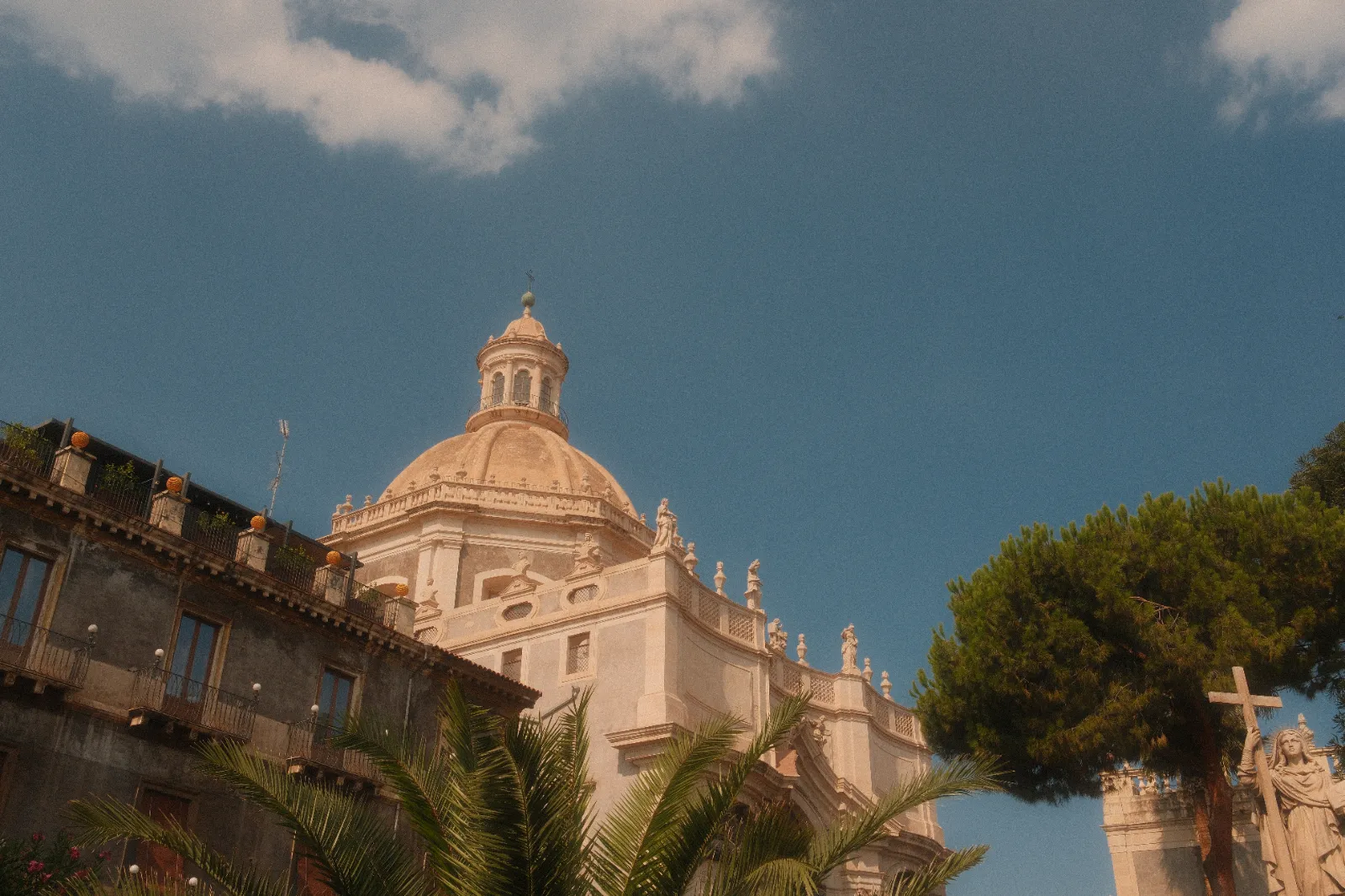
Summer Chrome is a Fujifilm recipe by the photographer Osan Bilgi (his site, and Instagram). It's built on Classic Chrome with almost every setting pushed: strong grain, strong Color Chrome Effect, strong Color Chrome FX Blue, and both ends of the tone curve pulled down. The full settings are below, followed by four days of Catania shot with it.
Same setup as the rest of the summer: the Fujifilm X-E5 with the XF 23mm f/2.8 R WR and a K&F Concept black diffusion 1/4 left on the front. I loaded the recipe on the first morning and didn't open the menu again.
Summer Chrome Fujifilm film recipe settings
| Film Simulation | Classic Chrome |
|---|---|
| Grain Effect | Strong / Large |
| Color Chrome Effect | Strong |
| Color Chrome FX Blue | Strong |
| White Balance | Auto, +5 Red, -6 Blue |
| Dynamic Range | DR400 |
| Highlight | -2 |
| Shadow | -2 |
| Color | +4 |
| Sharpness | 0 |
| Noise Reduction | -4 |
| Clarity | -4 |
| Exp. Compensation | 0 to +1 |
| ISO | Auto, 500 to 6400 |
Which cameras it works on
The recipe needs Classic Chrome, Color Chrome FX Blue and Clarity. Color Chrome FX Blue arrived with the fourth generation processors, so you'll find it on bodies like the X100vi, X100v, X-E5, X-E4, X-T4, X-T30ii, X-S10, X-T5 and X-H2, and on the recent GFX cameras. If yours is older than that, or if the setting isn't in your menu, set everything else as listed and leave that line out. The difference shows up in the sky and in deep blues, and nowhere else.
DR400 needs ISO 640 as a minimum, which is why the range doesn't really start at 500 in practice. And Clarity at -4 makes the camera pause for about a second after every frame while it processes, which you feel immediately when the street scene in front of you is moving. I got used to it. If you can't, set Clarity to 0 and accept a slightly harder image.
What it looks like
The white balance shift of +5 Red and -6 Blue is aggressive, more than most warm recipes go, and it's why Classic Chrome doesn't read as its usual muted documentary self here. Highlight and Shadow both sit at -2, which compresses the tonal range from both ends at once. That's what gives it the printed look, closer to a page out of a 1970s travel magazine than to a file off a sensor. Reds go deep, blues go dense, and the Strong / Large grain sits heavily enough that even a quick snapshot has some weight to it.
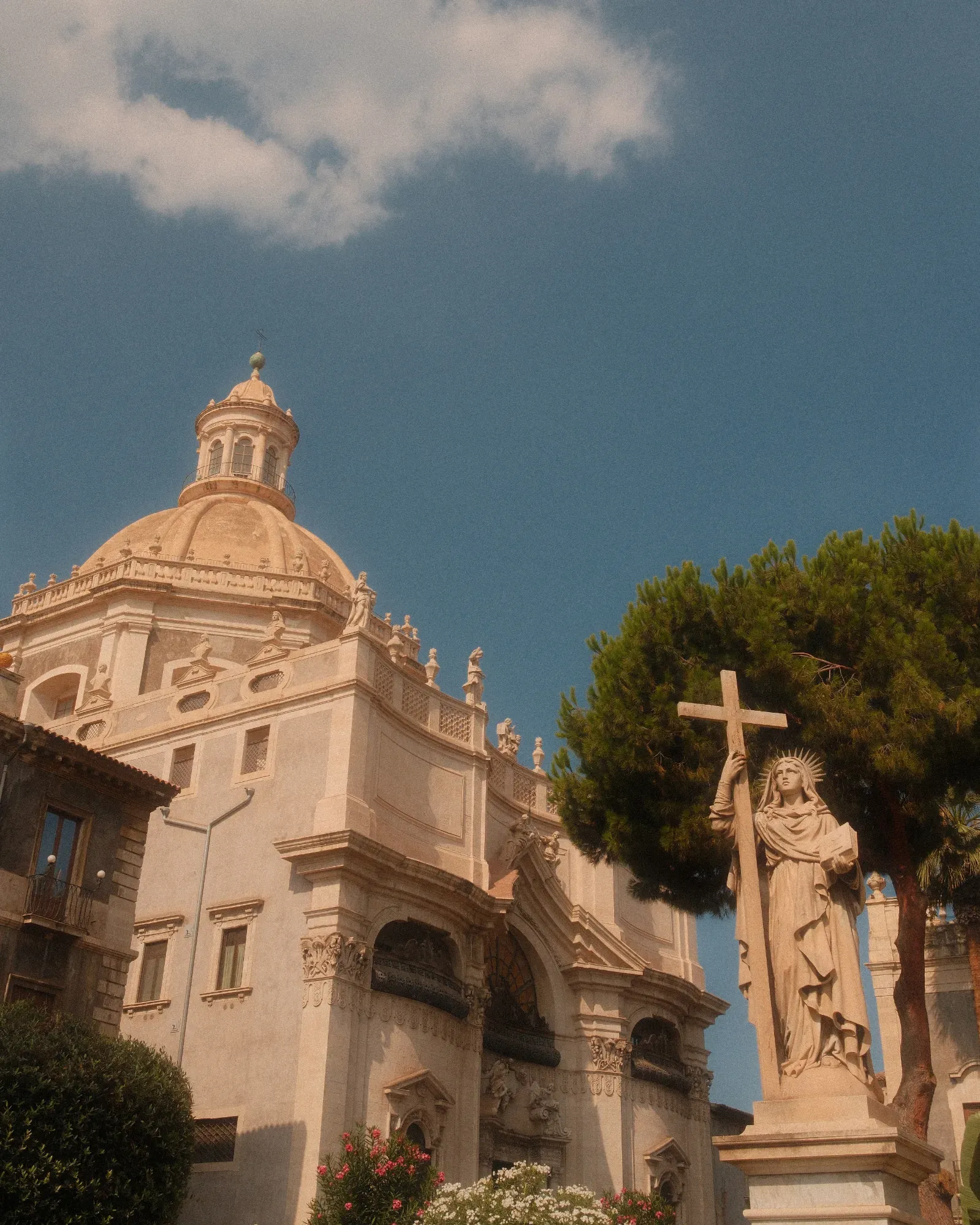
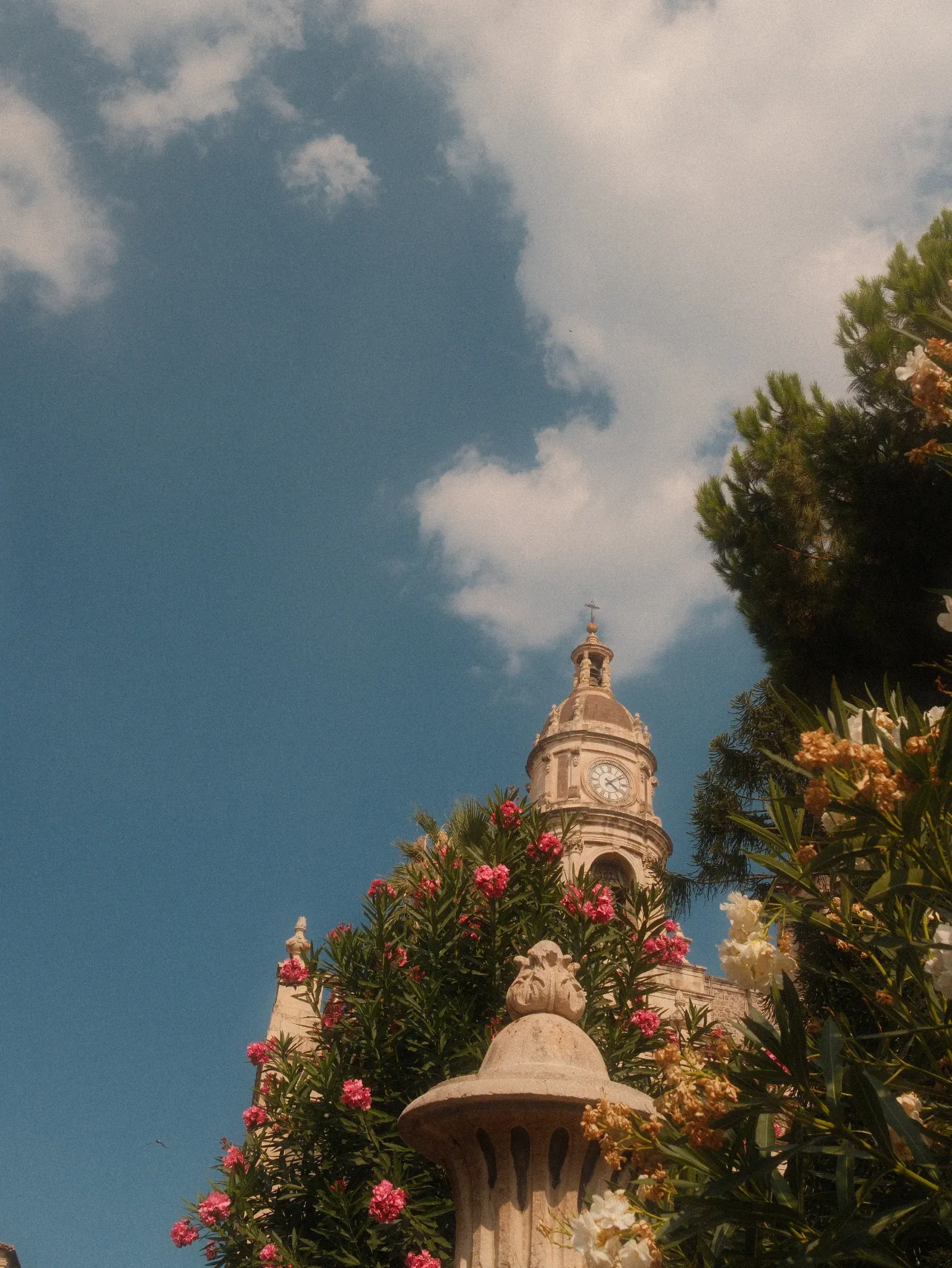
The trade is that it needs strong directional light. Under flat overcast it just looks murky. Put it in front of a white wall at two in the afternoon with a hard shadow line across it and it's the best thing on the camera.
It also flatters warm stone and evening light, which is most of why it travels well. Catania in July is white walls, black volcanic stone and hard shadow lines, so I left it loaded for four days.
Three things to try
None of these are rules, just things worth testing. A frame full of pink, whether flowers or a painted facade, can push the white balance hot: ease the +5 Red and -6 Blue back a little and shoot it again. At midday the compressed curve buries the shadows, so expose for the shadow you want to keep and let the wall behind it go bright. And turn the grain off once, especially by the sea: clean tones, all the detail the lens resolves, and with a 1/4 diffusion filter on the front it becomes a softer version of the same recipe. Worth a second custom slot if you like it.
Piazza del Duomo
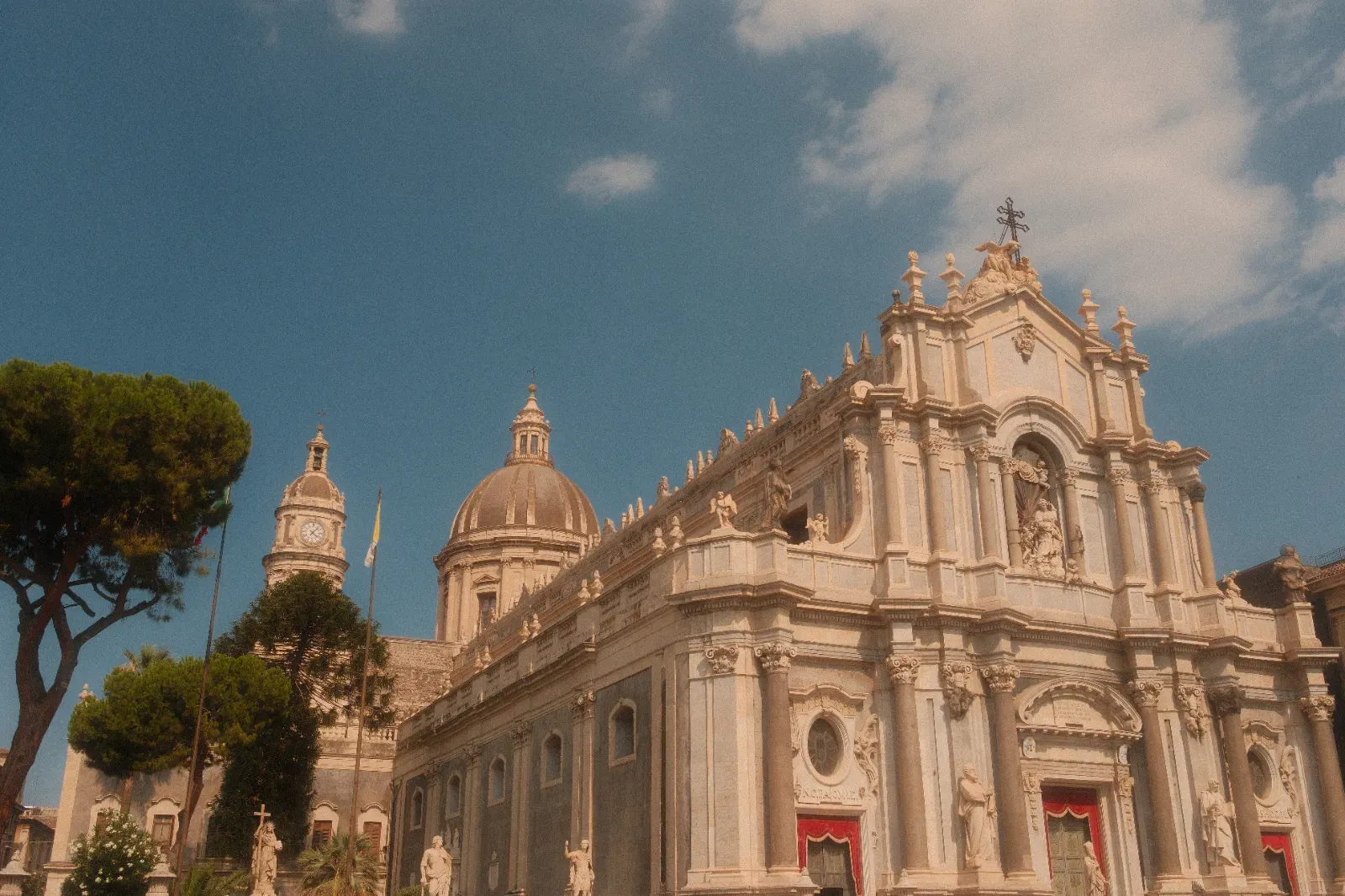
Everything in the centre starts here. The Cattedrale di Sant'Agata takes one side of the square, and in front of it sits the Fontana dell'Elefante, the black lava elephant with an obelisk on its back that the city has used as its symbol for centuries.
The elephant is a hard subject in the middle of the day. Dark volcanic stone against pale limestone and a bright sky, so the meter wants to lift it and blow out everything behind. Summer Chrome helps more than you'd expect: the -2 highlights hold the facade, and the compressed shadows keep the lava stone as a shape instead of a hole. I underexposed a touch and let the black stay black.
The roof of the Badia di Sant'Agata
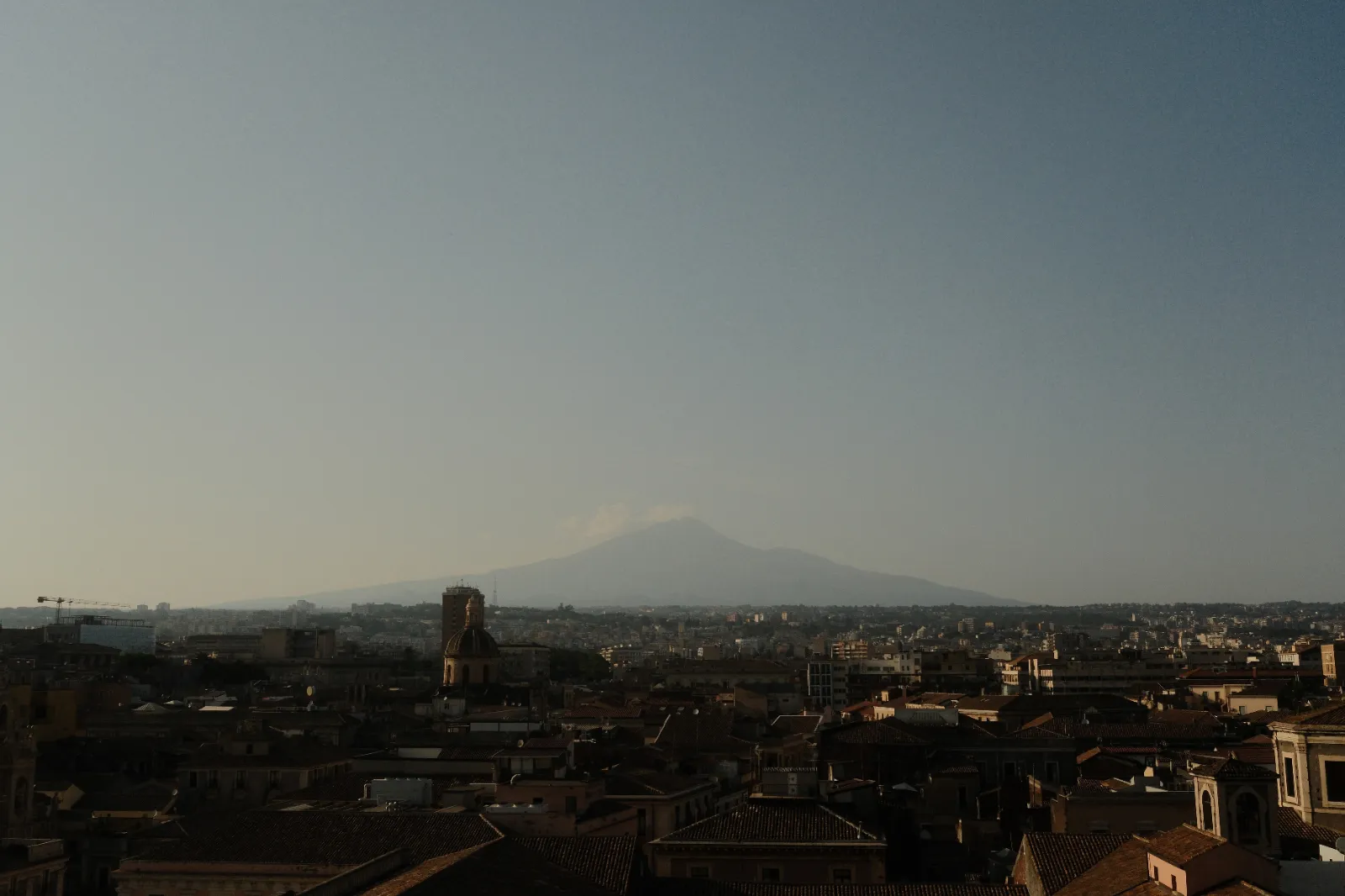
The one thing I'd tell anyone to do in Catania. The Chiesa della Badia di Sant'Agata is on the same square, and for seven euros you climb the dome and come out on the roofs, about ten minutes of stairs.
From up there the city is laid out in terracotta and grey, the cathedral seen from above, Etna behind all of it. On a clear day the volcano is the only thing in the frame with any altitude, so it works as horizon and subject at once. The rooftops are warm, the sky is dense blue, and the line between the two is exactly the kind the compressed curve likes.
Go in the morning or late in the afternoon. There's no shade up there.
The streets and the markets
The markets are where I got most of my frames. Catania's street markets run through the old centre, loud and tight and completely uninterested in you, which is the best thing that can happen while you're photographing.
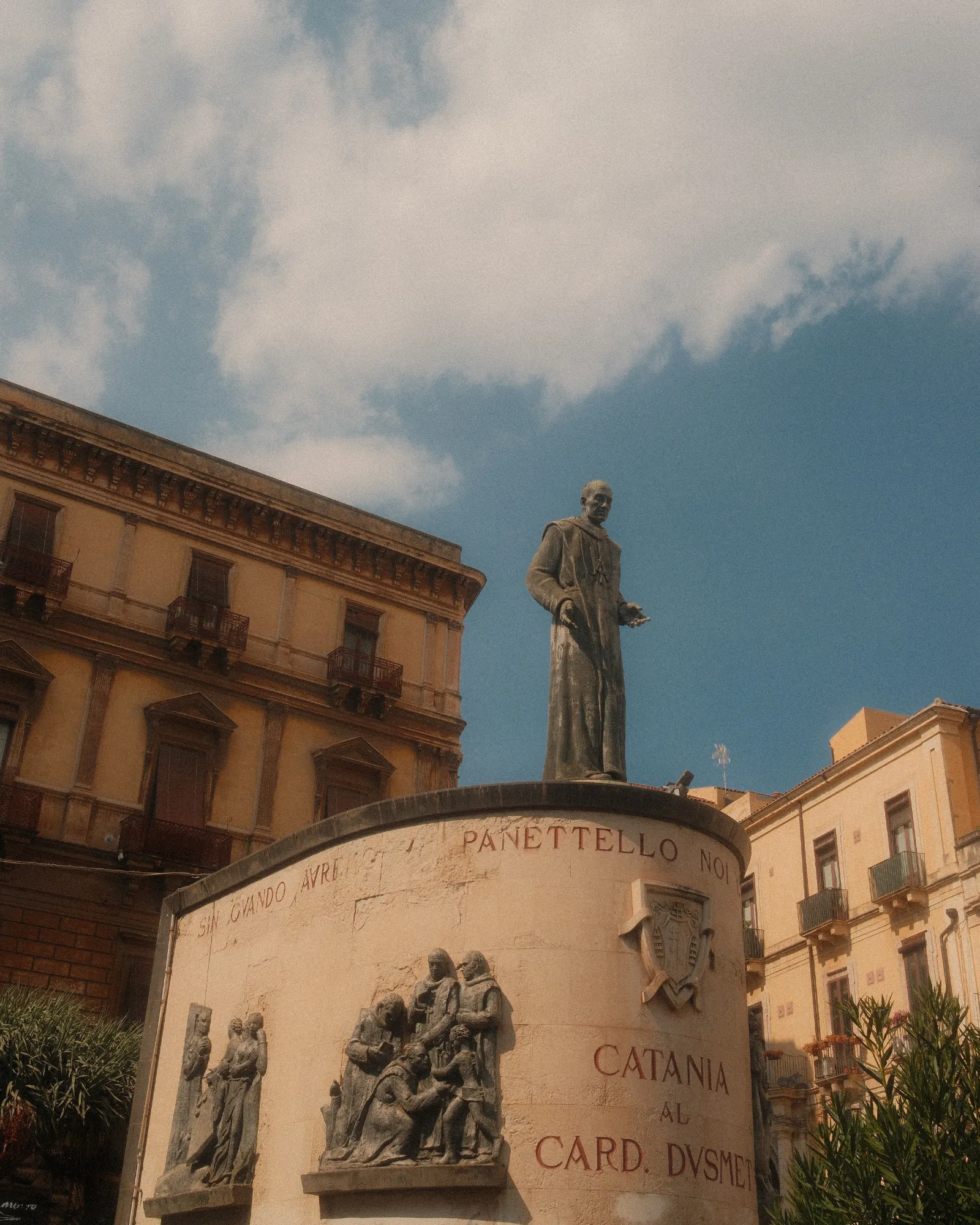
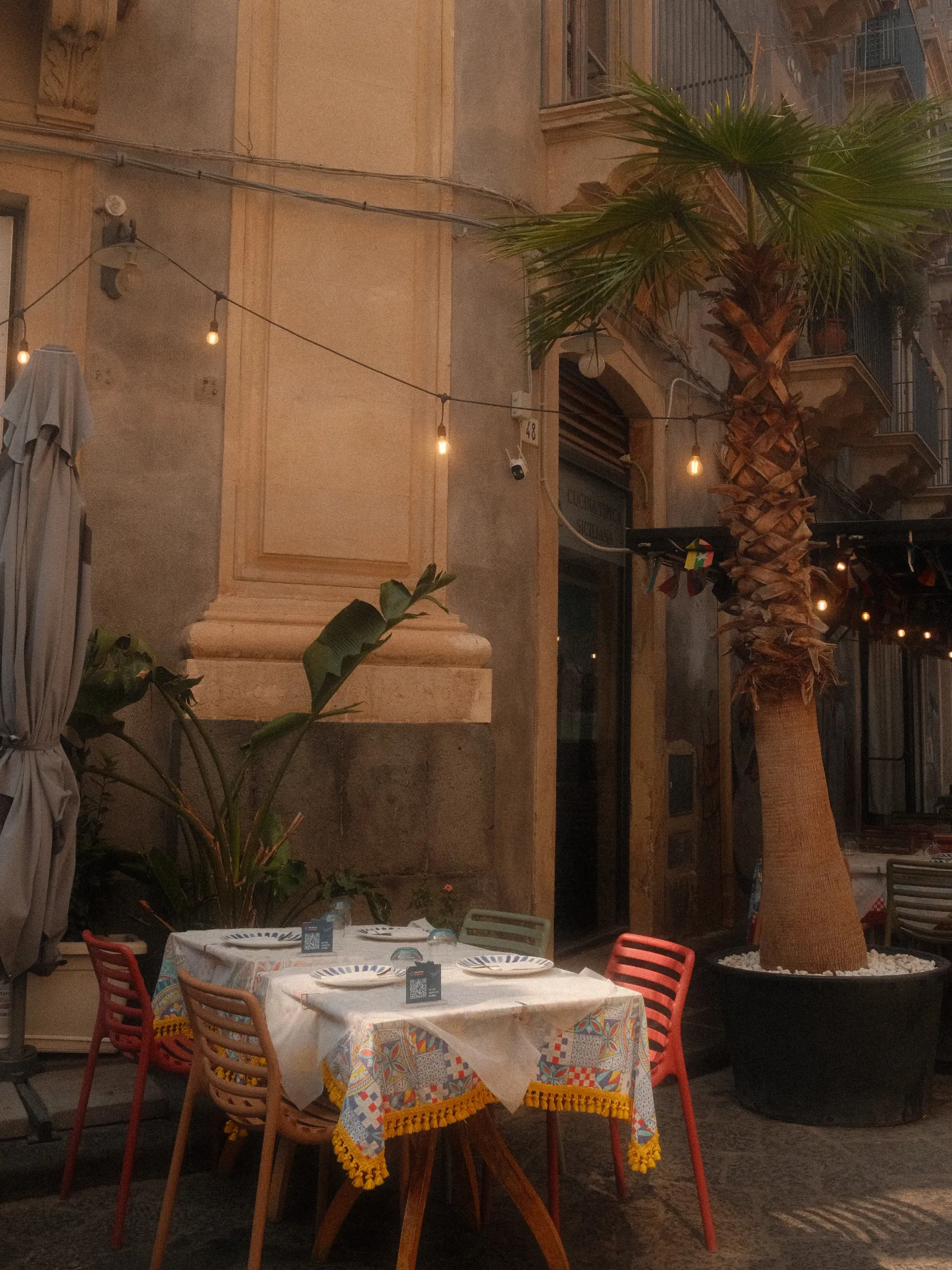
The stalls are only half of it. The other half is what they do to the architecture: baroque facades and heavy stone doorways with awnings, crates, plastic sheeting and hand painted signs stacked against them. Summer Chrome is built for that. Saturated plastic and painted metal go dense instead of garish, and the black lava stone the city is built from stays properly black next to them. Half of Catania is that dark grey, and a recipe that lifted shadows would turn all of it to mud.
Catania beach
If you push past the centre you can walk to the beach, and it's worth knowing what you're walking to.
It's the beach of a large city, not the best beach in Sicily, and the route out is not the prettiest walk you'll take on the island. A good part of the sand is privatised, so the free public section is small, and it sits close to a waste area.
It does the one job you need it for, which is cooling off after a stifling day in the centre. If you want a Sicilian beach worth planning a day around, that's Isola Bella below Taormina, an hour away by bus.
Four days
Four days suited Catania. Enough to stop reading the map and start looking around, and I was ready to leave the heat behind by the end of it.
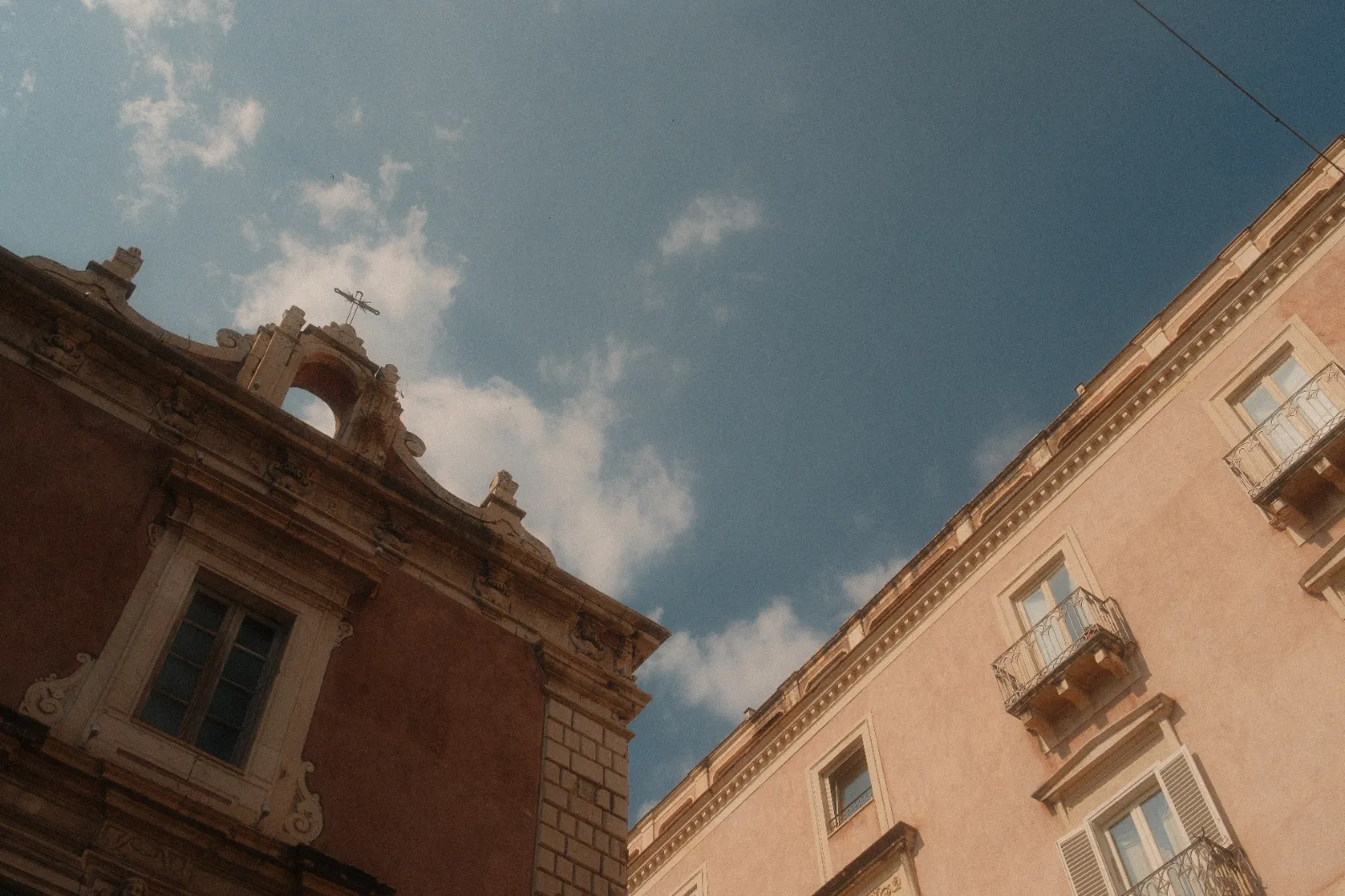
I never changed the recipe once. Pick a look on the first morning and the rest of the trip goes on what's in front of the lens instead of on the menu. If you want to see how it sits next to the other two recipes I used in Sicily, they're in the three recipes for Sicily.
Help me keep writing
If these articles are useful to you, have a look at what I make.
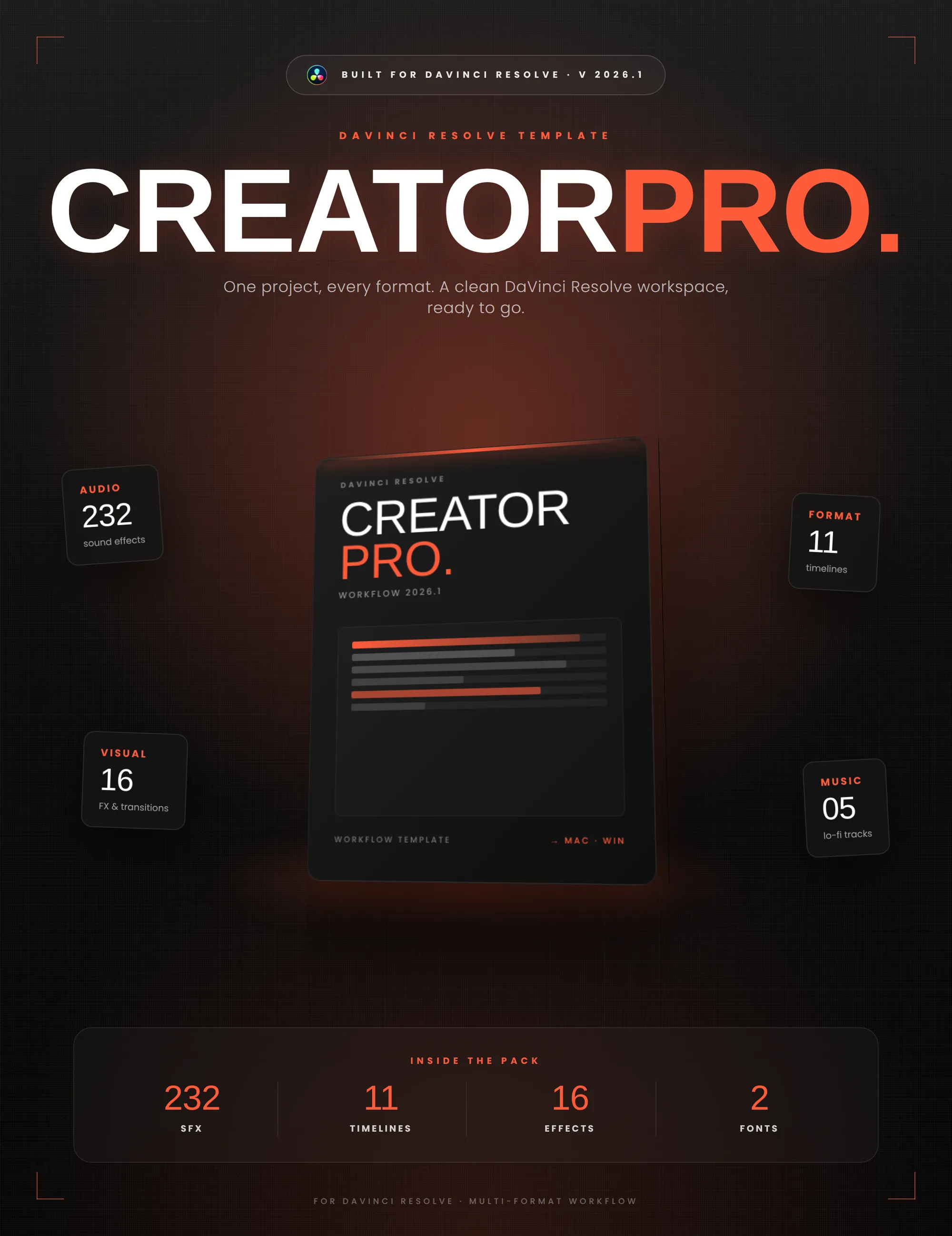
Creator Pro
The ultimate DaVinci Resolve workspace for creators
View plugin — €29.00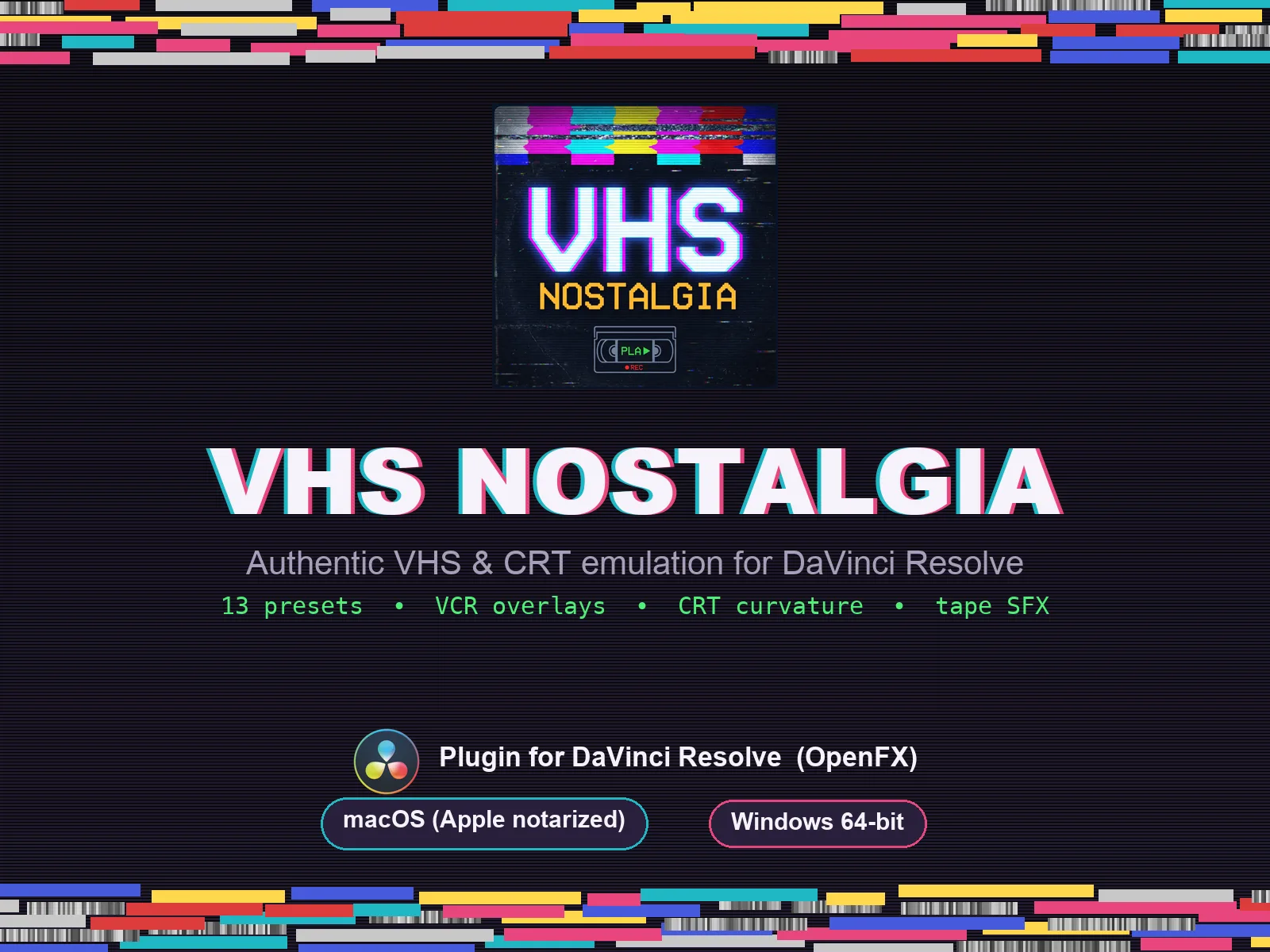
VHS Nostalgia
Real VHS & CRT emulation for DaVinci Resolve
View plugin — €39.00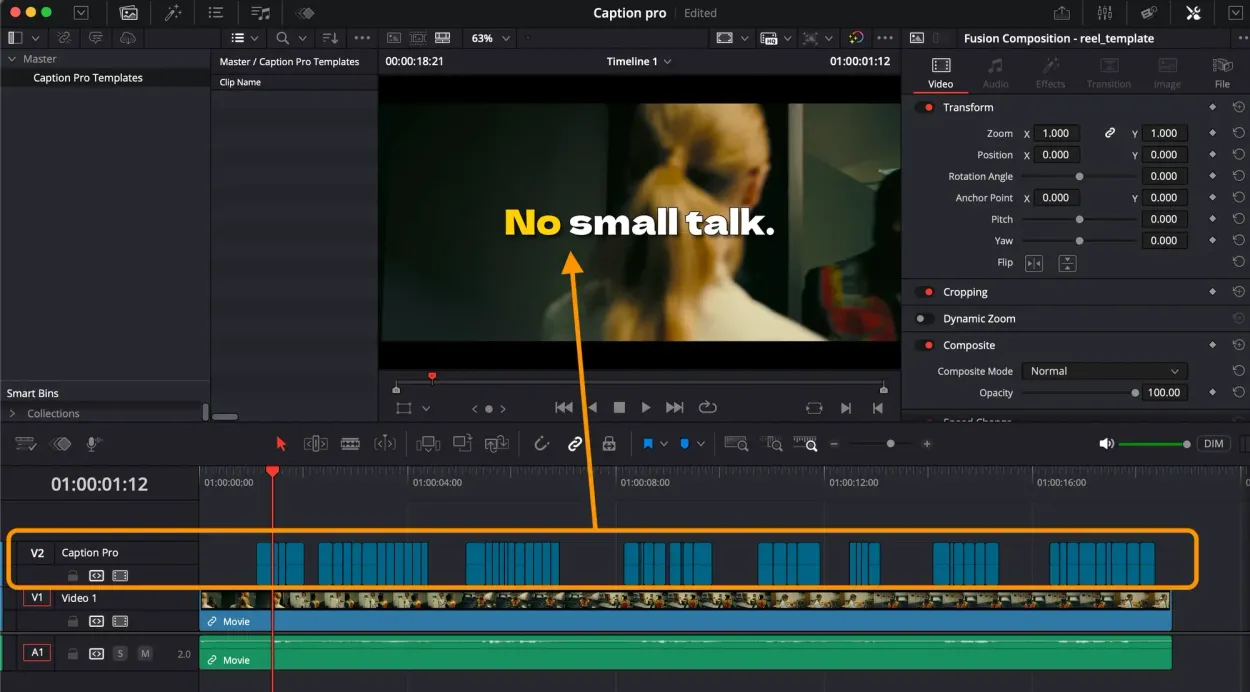
Caption Pro
Automatic word-by-word captions and translation for DaVinci Resolve
View plugin — €29.00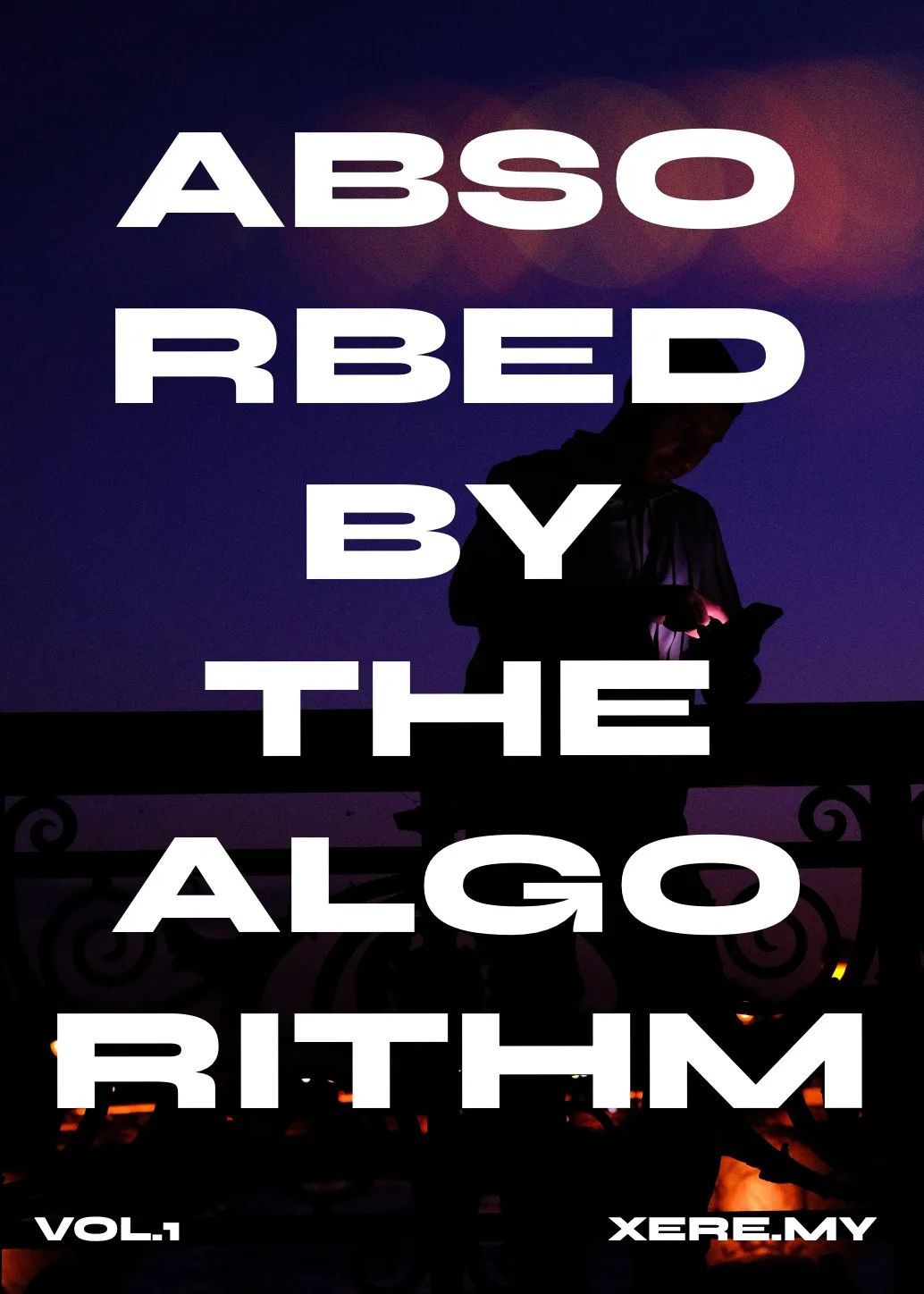
Get the zine
"Absorbed by the algorithm Vol. 1": 33 images shot in Paris, 28 pages, shipped worldwide.