Best 3 Fujifilm film recipes for Sicily
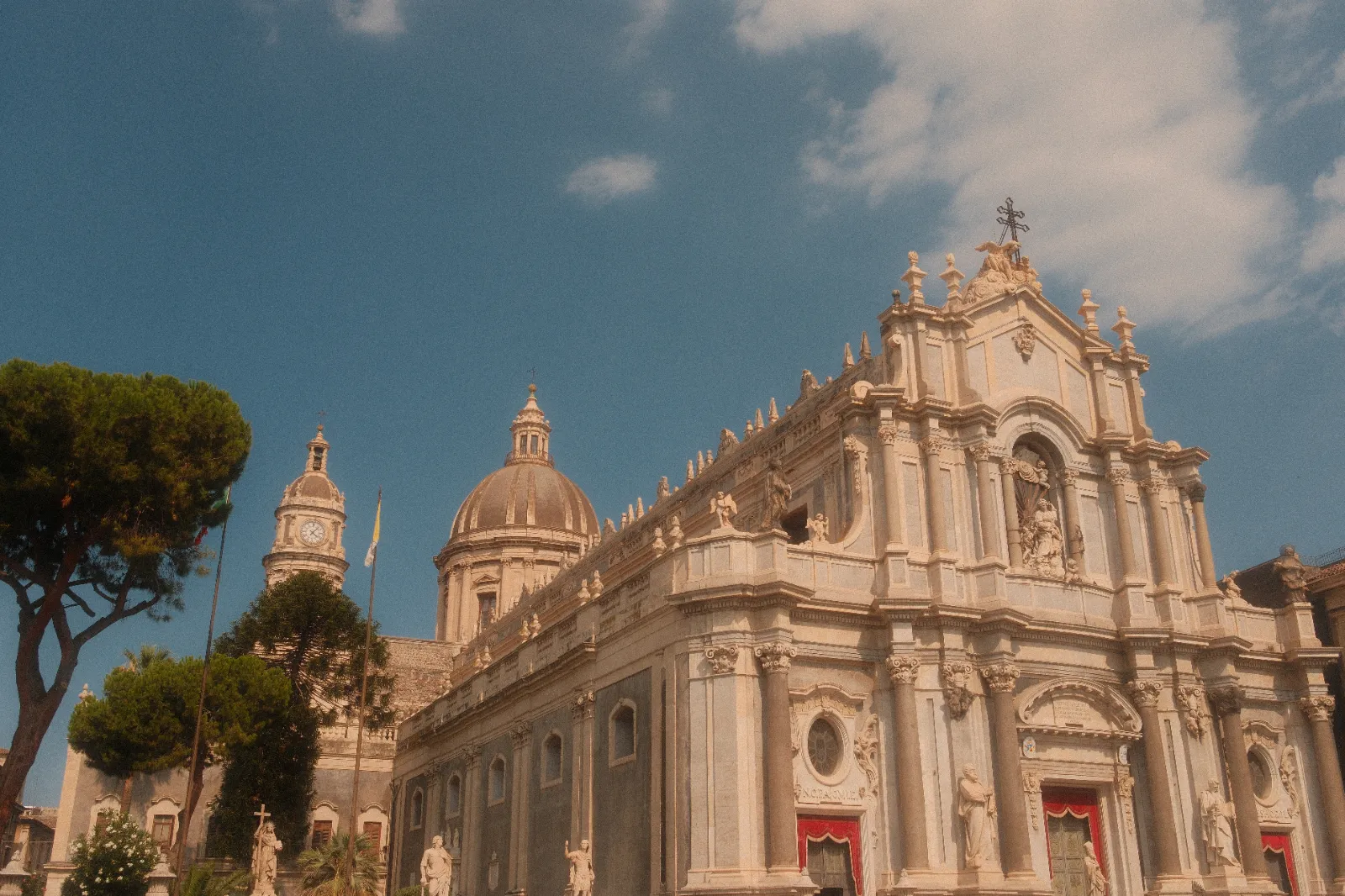
Sicily in July gives you one kind of light for most of the day: hard, high, and bouncing off pale stone. Then for an hour and a half in the evening it gives you the other kind, low and orange, with the sea behind it. No single recipe covers both, so I carried three.
Last Summer Roll through Palermo and Cefalù, Summer Chrome in Catania, Essenza in Taormina. All three are SOOC JPEG, nothing done afterwards, all three shot on the Fujifilm X-E5 with the XF 23mm f/2.8 R WR.
Last Summer Roll by Emanuele De Luca
Created by Emanuele De Luca.
This is the one I'd take if I could only load one. It's built on Classic Negative with a strong Color Chrome Effect, a warm Auto white balance at +3 Red and -5 Blue, and Smooth Skin Effect on Weak.
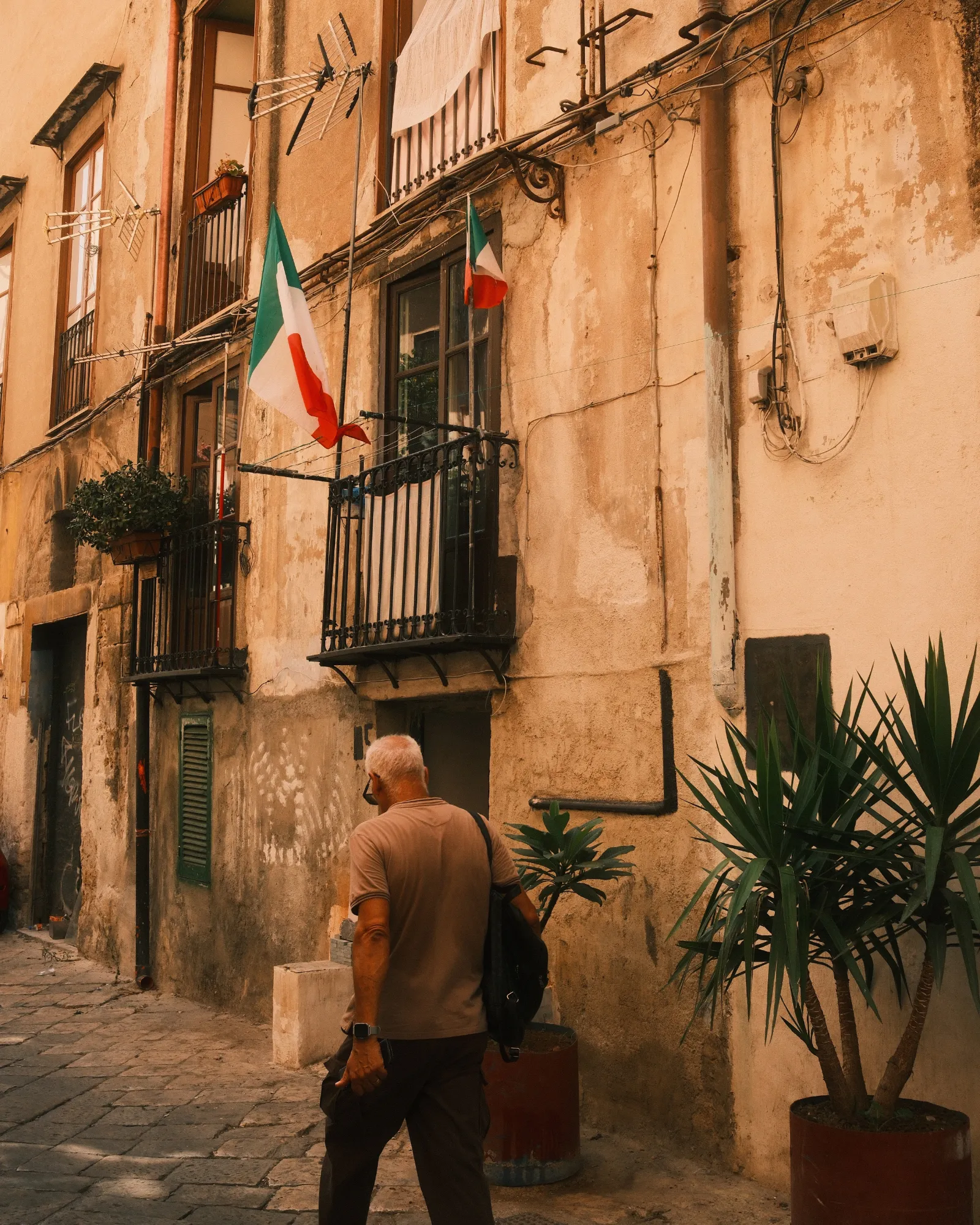
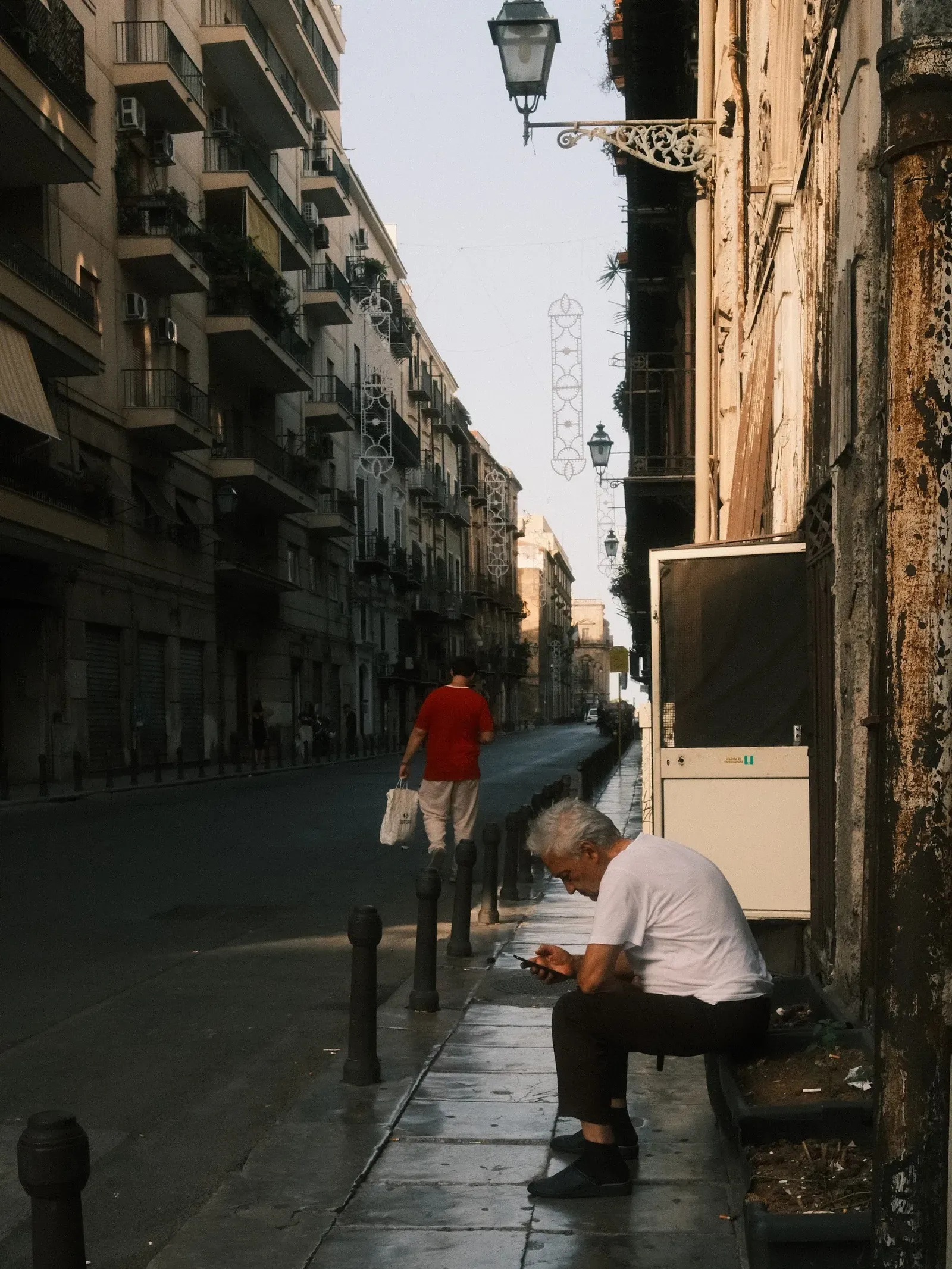
What makes it work in Sicily is what Classic Negative does with two colours you see constantly there: skin and stone. Skin stays natural instead of going orange under a warm shift, and the ochre walls hold their colour without turning into a single flat wash. DR400 gives you room in high contrast scenes, which in Palermo means the difference between a usable frame and a black alley with a white slice of sky at the end of it.
The Weak / Small grain is light enough that you forget it's there until you look at a print. I shot four days of Palermo and an evening in Cefalù on this recipe without changing a setting.
Last Summer Roll Fujifilm film recipe settings
| Film Simulation | Classic Negative |
|---|---|
| Grain Effect | Weak / Small |
| Color Chrome Effect | Strong |
| Color Chrome FX Blue | Weak |
| Smooth Skin Effect | Weak |
| White Balance | Auto, +3 Red, -5 Blue |
| Dynamic Range | DR400 |
| Highlight | -2 |
| Shadow | +0.5 |
| Color | +4 |
| Sharpness | 0 |
| Noise Reduction | -4 |
| Clarity | 0 |
| Exp. Compensation | 0 to +1 |
| ISO | 640 to 1600 |
Best on street scenes, people, food, and the long warm evenings. Less happy in the middle of the day, where the contrast can still get away from you even with DR400.
Essenza by Emanuele De Luca
Also by Emanuele De Luca, and the one that surprised me. Essenza is built on Pro Neg. Hi, which sounds like the wrong choice for a summer trip and isn't.
Pro Neg. Hi is a portrait simulation. It holds skin tones without pushing them warm, and it has more contrast than Pro Neg. Std without going near the crushed blacks of Classic Chrome. Color at +3 with both Color Chrome settings on Strong gives you dense blues and reds while everything else stays restrained, so the Ionian sea reads deep rather than electric.
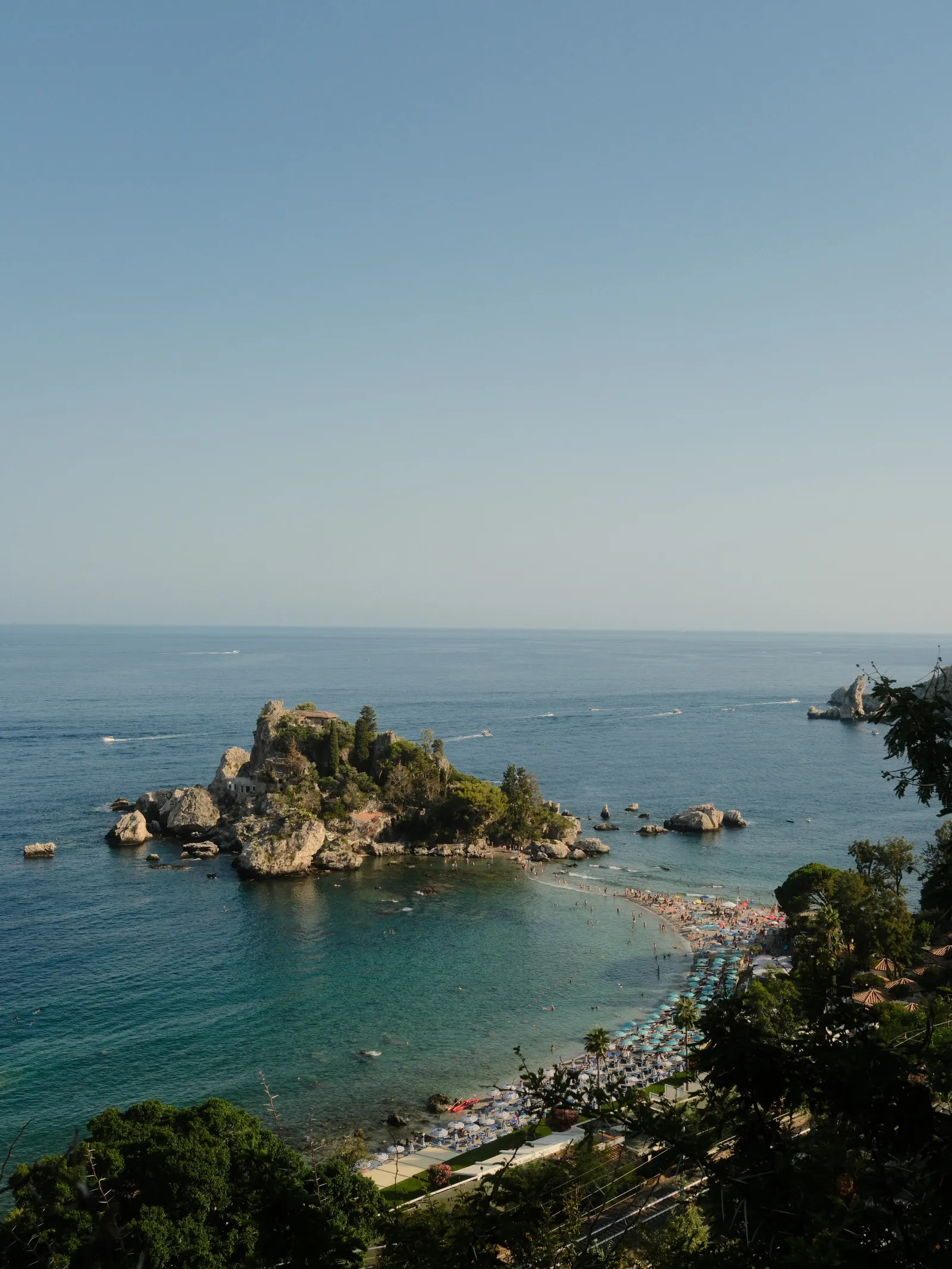
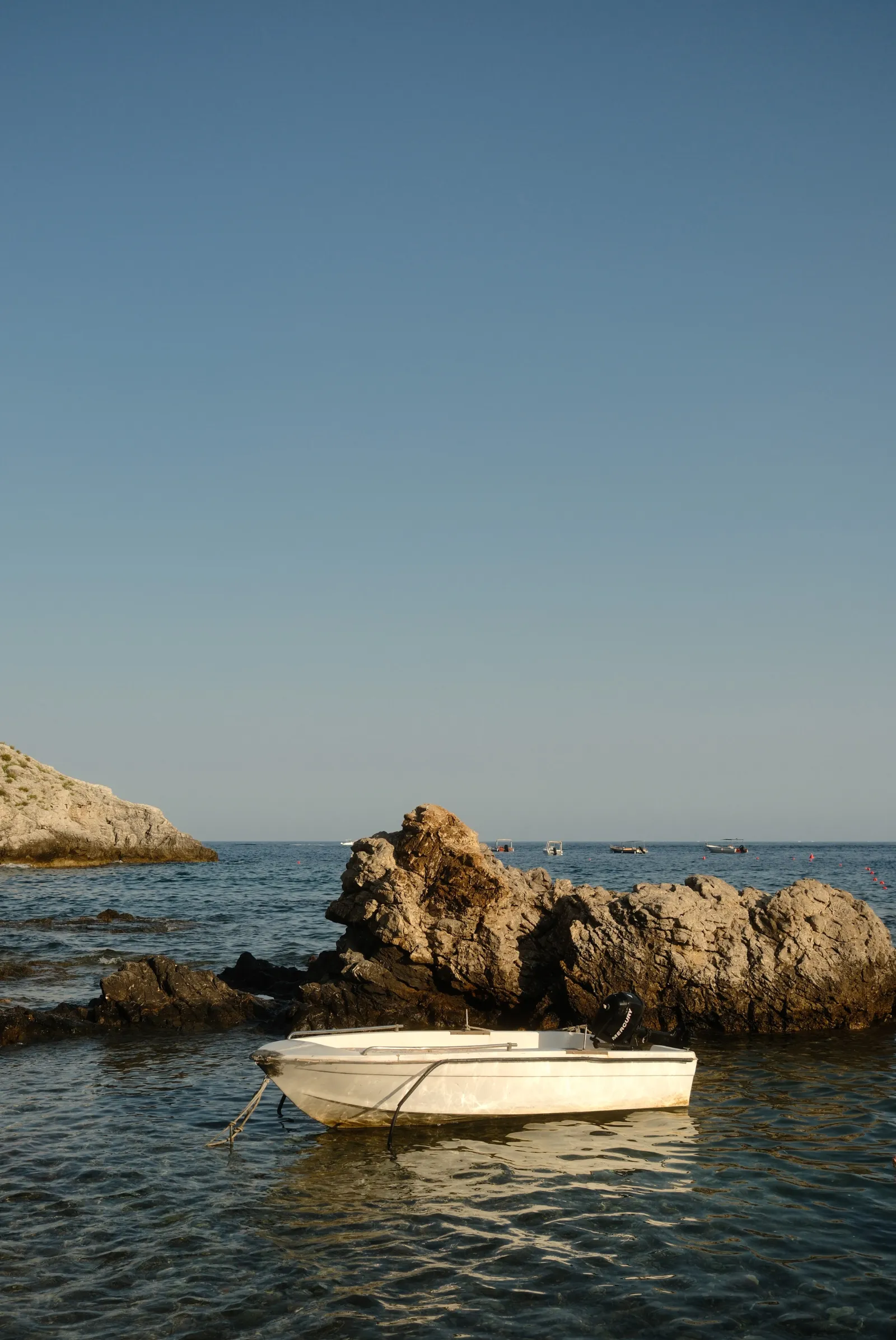
The tone curve is the part that matters on a Sicilian afternoon. Highlights at -2 protects white stone and bright water, Shadows at +1 keeps some bite in the alleys, and DR400 handles the backlit gaps you get whenever a street opens onto the sea. Grain is off and Sharpness sits at 0, which is why it pairs well with a diffusion filter: the softness comes from the glass instead of the file.
Essenza Fujifilm film recipe settings
| Film Simulation | Pro Neg. Hi |
|---|---|
| Grain Effect | Off |
| Color Chrome Effect | Strong |
| Color Chrome FX Blue | Strong |
| White Balance | Auto, +3 Red, -5 Blue |
| Dynamic Range | DR400 |
| Highlight | -2 |
| Shadow | +1 |
| Color | +3 |
| Sharpness | 0 |
| Noise Reduction | -4 |
| Clarity | 0 |
Best when the light is bright and you still want the frame to stay calm. Beaches, water, people, anything where a warmer recipe would tip the skin tones.
Summer Chrome by Osan Bilgi
Created by Osan Bilgi.
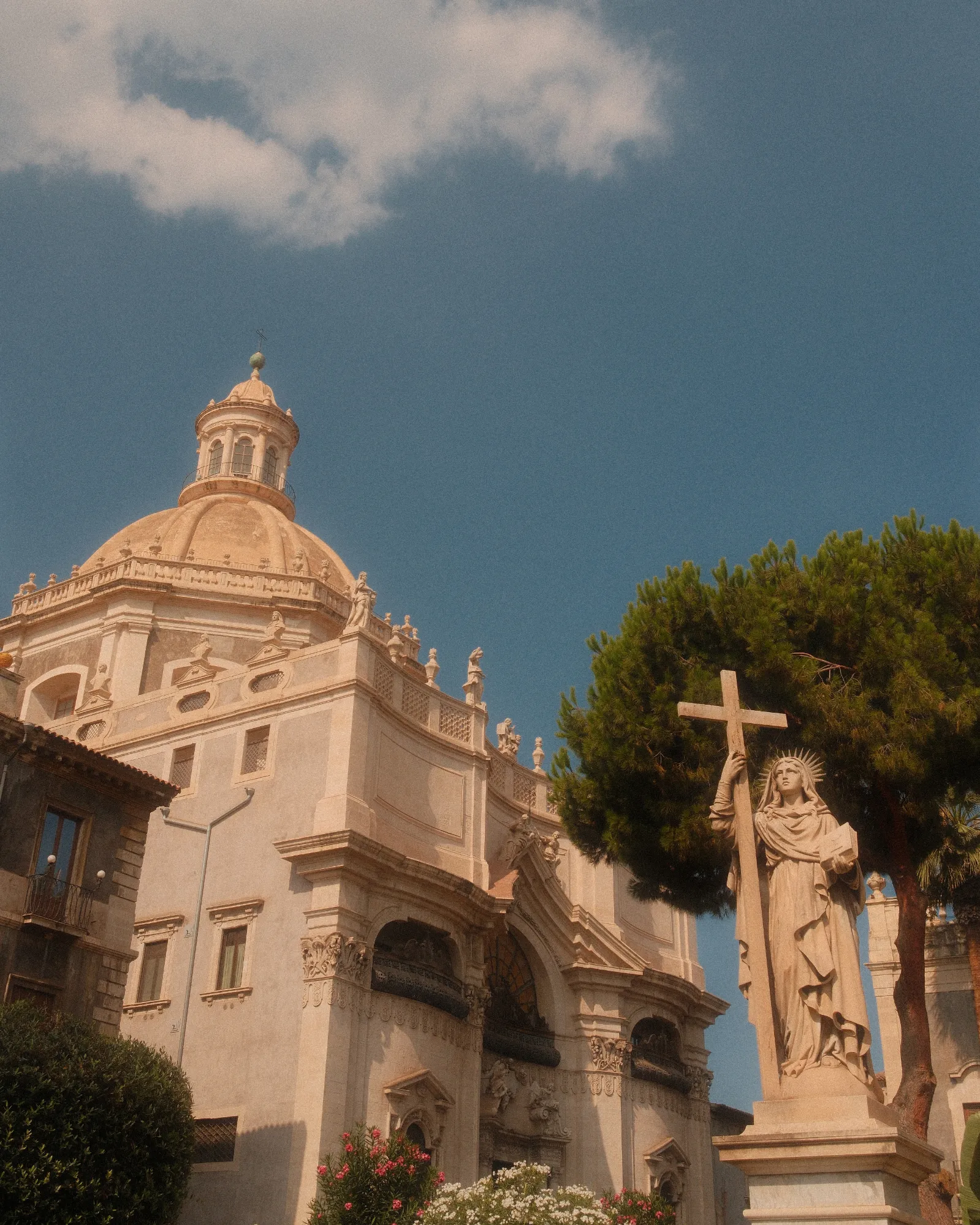
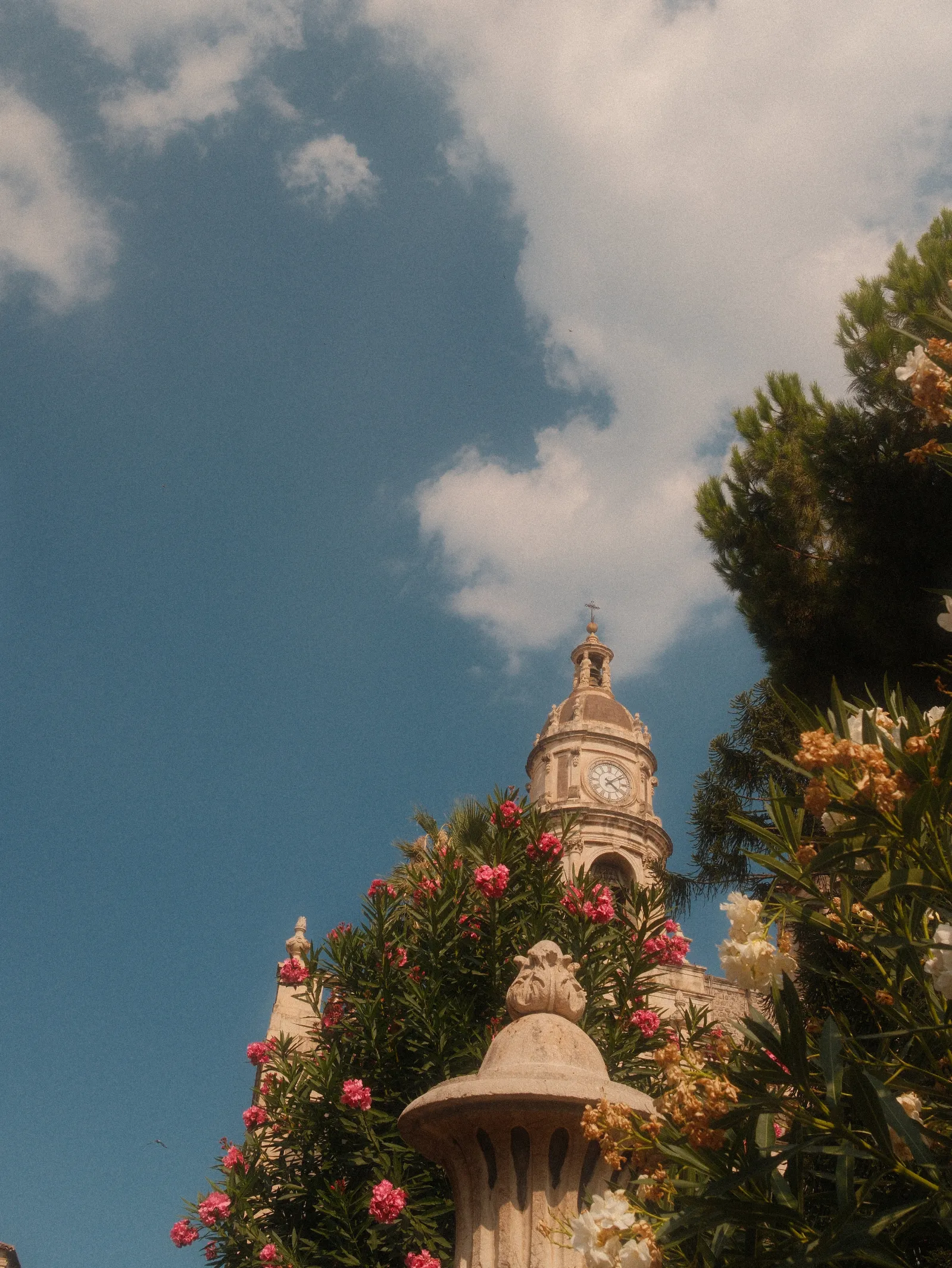
The loud one. Classic Chrome with almost everything turned up: Strong / Large grain, Strong Color Chrome Effect, Strong Color Chrome FX Blue, Color at +4, and both Highlight and Shadow pulled to -2. The white balance shift is heavier than the other two, +5 Red and -6 Blue.
Compressing highlights and shadows at the same time is what gives it the printed look, and it's also why it needs strong directional light to work. Sicily has that from ten in the morning until six in the evening, which is exactly the stretch where the other two recipes start to struggle. I used it in Catania on bright walls and hard shadow edges.
Summer Chrome Fujifilm film recipe settings
| Film Simulation | Classic Chrome |
|---|---|
| Grain Effect | Strong / Large |
| Color Chrome Effect | Strong |
| Color Chrome FX Blue | Strong |
| White Balance | Auto, +5 Red, -6 Blue |
| Dynamic Range | DR400 |
| Highlight | -2 |
| Shadow | -2 |
| Color | +4 |
| Sharpness | 0 |
| Noise Reduction | -4 |
| Clarity | -4 |
| Exp. Compensation | 0 to +1 |
| ISO | Auto, 500 to 6400 |
Best on bold colour in hard light. It will steamroll anything subtle, so keep it off the quiet scenes.
Bonus: Classic Cinema for video
The three above are for stills. When I switch to video I switch to Classic Cinema, my own recipe, and it's the only video recipe that has stayed on my camera for the past two years.
It's Classic Negative again, this time with a flat tone curve (Highlights and Shadows both at -1), DR100, and Sharpness at -2 to kill the digital detail Fujifilm sensors produce by default. White balance is Auto at +3 Red and -6 Blue.
Sicily is where it earned its slot. Shooting the sea at the end of the day means pointing the camera into hard, low light coming straight off the water, and that's where video usually falls apart: the blues go electric and the highlights clip. The flat curve keeps the water under control, and the deep blues come out dense instead. Bright colours in the frame, swimwear, parasols, boat hulls, stay saturated without tipping over.
Classic Cinema Fujifilm video recipe settings
| Recording Mode | FHD 16:9 29.97P (enough if sharing on social media) |
|---|---|
| Alternative Mode | 4K 16:9 29.97P (higher quality, bigger file) |
| Stabilization | IBIS (if available) |
| Film Simulation | Classic Negative |
| White Balance | Auto R:+3 B:-6 |
| ISO | 200 - 640 |
| Dynamic Range | DR100 |
| Tone Curve (Highlights) | -1 |
| Tone Curve (Shadows) | -1 |
| Color | +3 |
| Sharpness / Details | -2 |
| High ISO NR | -2 |
| Interframe NR | AUTO |
| Chromatic Aberration Correction | Yes |
Nothing graded afterwards, same as the photos. Straight out of camera and into the edit.
How I split the three
Last Summer Roll lives on C1 and stays there. It's the recipe for walking around, for people, and for the end of the day when the stone goes orange.
Essenza comes out when the scene is bright and I want it to stay controlled: water, beaches, anything backlit, anything with faces in it that a warm recipe would push too far.
Summer Chrome is for the middle of the day, the part of a Sicilian afternoon most people sit out. Flat overhead light is what kills the other two, and it's the only condition where Summer Chrome's compressed curve and heavy grain turn into an advantage instead of a problem.
Classic Cinema stays on the video slot the whole trip. I never switch it for anything else.
If you want more than three, the five recipes I use all summer covers the rest, including one for after the sun has gone.
Help me keep writing
If these articles are useful to you, have a look at what I make.
Creator Pro
The ultimate DaVinci Resolve workspace for creators
View plugin — €29.00
VHS Nostalgia
Real VHS & CRT emulation for DaVinci Resolve
View plugin — €39.00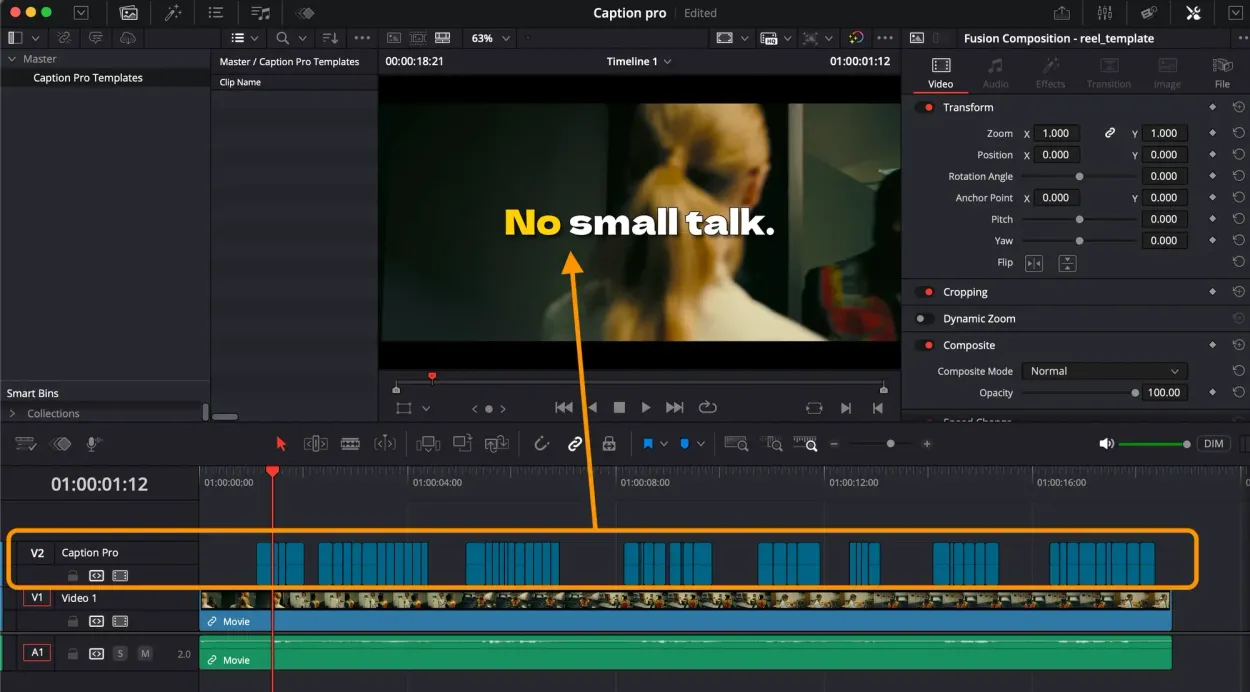
Caption Pro
Automatic word-by-word captions and translation for DaVinci Resolve
View plugin — €29.00
Get the zine
"Absorbed by the algorithm Vol. 1": 33 images shot in Paris, 28 pages, shipped worldwide.