National Geographic Named the Fujifilm X-E5 the Best Travel Camera: Here Is Why They Are Right
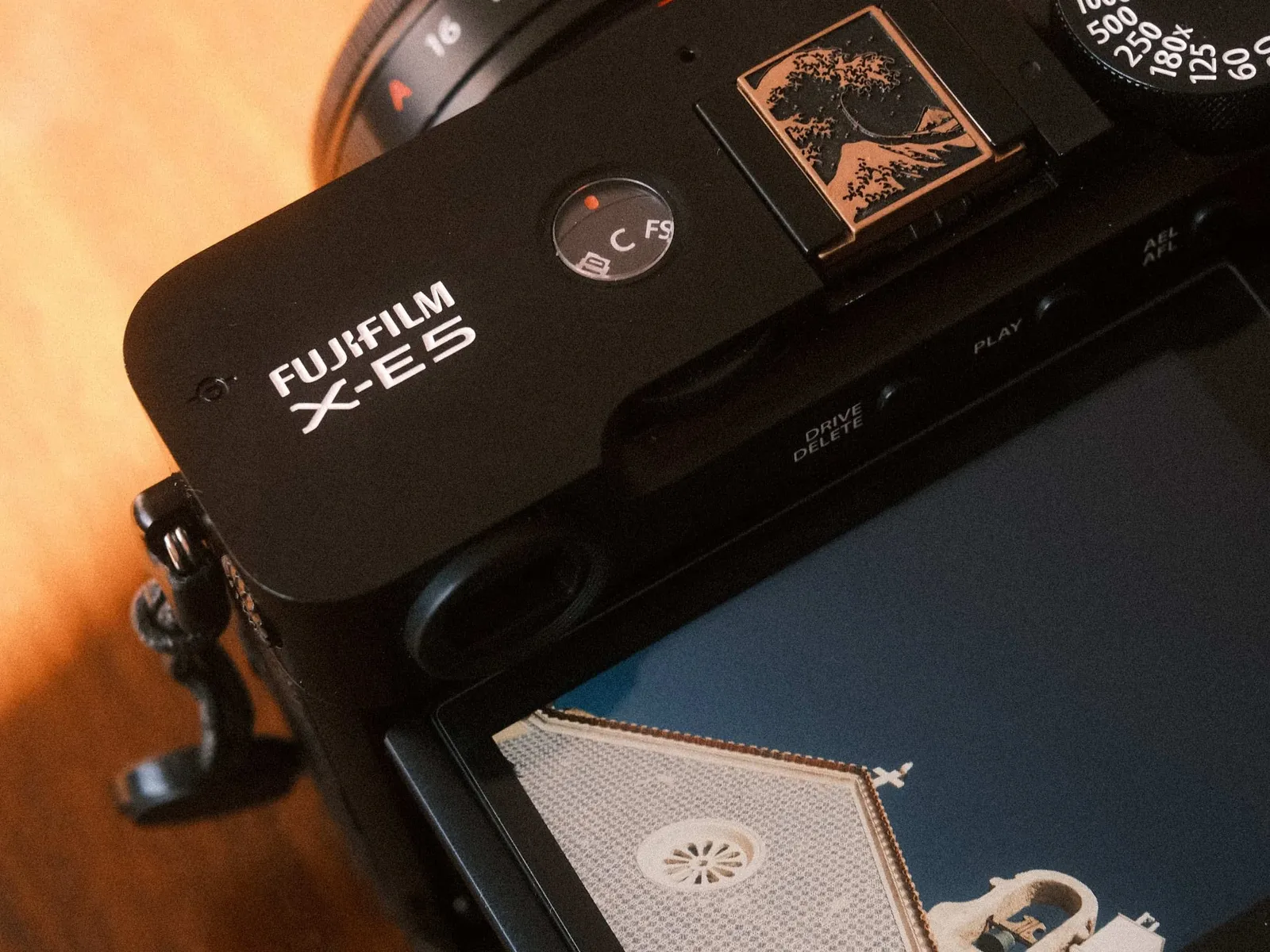
When National Geographic publishes a travel gear guide, it is worth paying attention. Their photo engineering team—led by Tom O’Brien and Eric Flynn—does not review cameras from behind a desk. They build custom rigs, maintain cameras that survive rainforest moisture and sub-zero ice sheets, and outfit photographers heading to every corner of the planet.
For their latest field guide, they spent four months putting 26 cameras through rigorous real-world testing to answer a deceptively simple question: what camera should you actually pack when leaving home?
Their overall winner for Best compact digital camera for travel? The Fujifilm X-E5 (alongside its SLR-styled sibling, the X-T50).
| Testing team | National Geographic Photo Engineering (Tom O’Brien & Eric Flynn) |
|---|---|
| Scope | 26 compact cameras tested over four months |
| Overall winner | Fujifilm X-E5 and Fujifilm X-T50 |
| Key Nat Geo criteria | Image quality, lens versatility, durability, pocketability, fun |
| My test mileage | Sicily (Palermo, Catania, Syracuse), Istanbul, Cappadocia, Lisbon |
| Primary lens paired | Fujifilm XF 23mm f/2.8 R WR pancake |
| Total kit weight | Under 500 grams (body + 23mm pancake) |
Nat Geo’s verdict feels deeply vindicating. For over a year, social media was obsessed with the fixed-lens craze of the X100VI. But after walking thousands of kilometers with the X-E5 strapped to my wrist—from the sweltering alleys of southern Italy to the rooftops of Istanbul—I have been arguing the exact same thing: the X-E5 is the most complete travel camera available today.
Here is why National Geographic’s lab test matches what actually happens when you hit the road.
Lab tests vs. 15 kilometers on foot in Palermo
National Geographic’s engineers evaluated cameras on autofocus speed, build quality, and image quality. But travel has a way of testing gear in ways a lab never can.
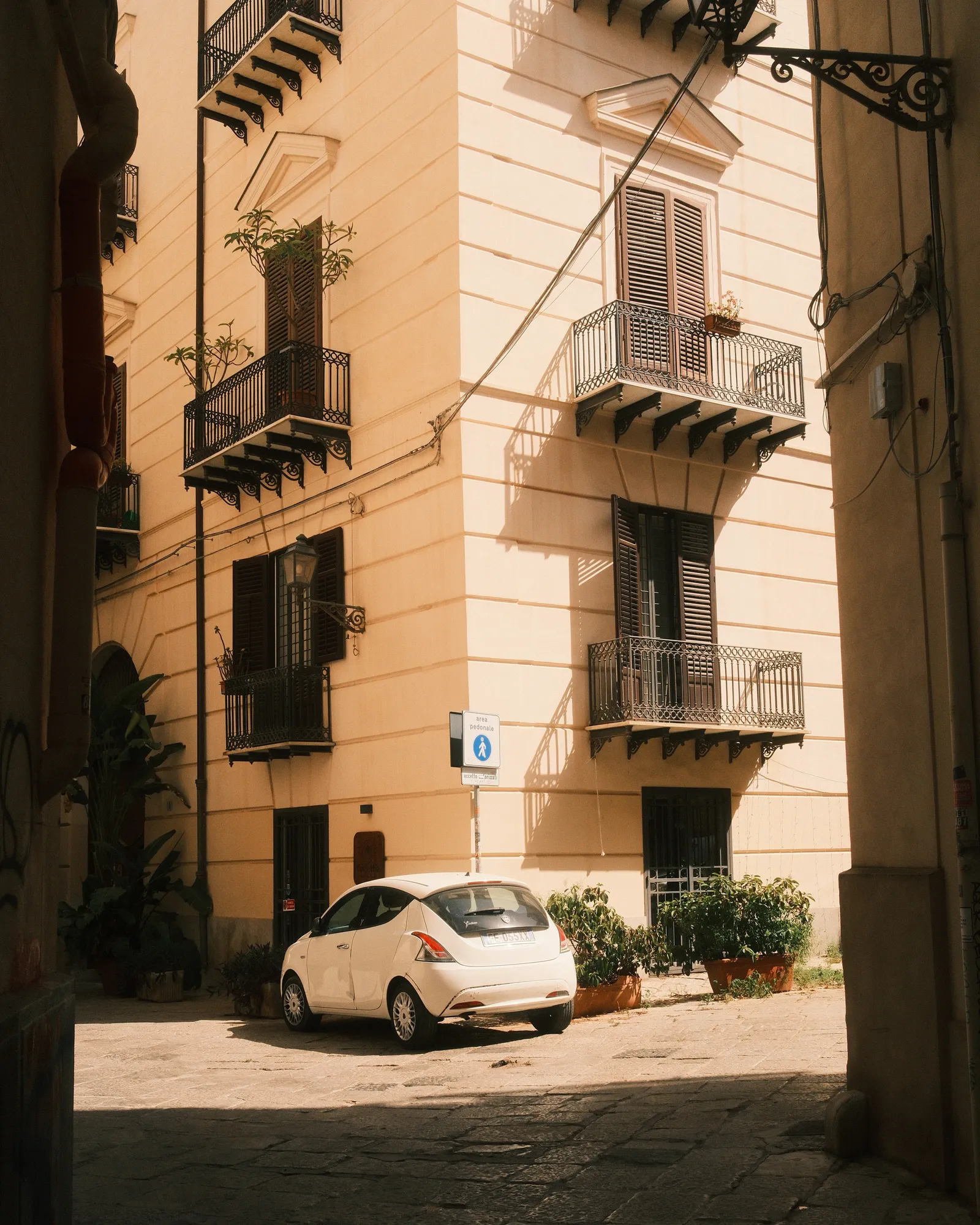
Take July in Sicily. I spent two weeks in Sicily without a car, relying solely on regional trains, intercity coaches, and my own feet. That meant walking 15 to 20 kilometers every single day in 38°C heat through four days in Palermo, four in Catania, and a week in Syracuse, with day trips to Cefalù and Taormina.
In that kind of heat, any camera system that weighs more than a bottle of water becomes an enemy. A full-frame body with a fast 24-70mm f/2.8 zoom is optically fantastic, but after three hours of climbing the steep stone staircases of Alfama in Lisbon or hiking Love Valley at sunrise in Cappadocia, that setup ends up locked in the hotel safe.
The best travel camera is not the one with the highest dynamic range score in a test chart. It is the camera you actually have in your hand.
The Fujifilm X-E5 paired with the XF 23mm f/2.8 pancake weighs under 500 grams. It sits on a slim wrist strap without tugging at your neck. You can sit down at Bar Timi in Palermo at 8:00 AM for an espresso, set the camera on the table, and nobody looks twice. It does not intimidate locals; it does not scream "expensive tourist target." It looks like an unassuming vintage film camera.
Why the X-E5 beats the X100VI (and the X-T50) for travel
National Geographic grouped the X-E5 and the X-T50 together, but when you look closer, the X-E5 has two massive advantages for travel photographers:
1. The interchangeable mount vs. the X100VI trap
When the X100VI came out, everyone wanted one. But as I wrote in my breakdown of the X-E5 vs. X100VI, a fixed 23mm lens is a self-imposed limitation on a long journey.
With the X-E5, you get the exact same compact rangefinder aesthetic and 40MP sensor as the X100VI. By day, the 23mm f/2.8 pancake keeps the body jacket-pocket flat. But when evening falls over the Bosporus in Istanbul or you want intimate street portraits in Syracuse, you can swap to the legendary XF 35mm f/1.4 R or adapt a tiny manual vintage prime. You have the flexibility of an entire lens system without carrying a heavy bag.
2. The rangefinder corner viewfinder vs. the X-T50 SLR hump
The X-T50 is an excellent camera (I compared the entire line in my guide on which Fujifilm camera to buy in 2026), but it features a central SLR prism bump.
The X-E5 uses a rangefinder silhouette with the electronic viewfinder positioned on the far left corner. That means when you bring the camera to your right eye, your left eye remains open to the street. You can see pedestrians walking into your frame, track scooters in narrow Italian alleys, and stay connected with the scene. More importantly, your face is not hidden behind a massive black box, which keeps street interactions natural and relaxed.
What Nat Geo missed: leaving the laptop at home
National Geographic praised the camera's image quality and handling. But they omitted the single biggest superpower of traveling with a Fujifilm body: you do not need a computer.
With Sony, Nikon, or Canon, packing a digital camera for vacation usually implies a hidden tax: packing a laptop, USB-C card readers, and spending your vacation evenings in a hotel room importing RAW files and nudging sliders in Lightroom.
With the X-E5, I shoot SOOC JPEG only.
Fujifilm’s color science and film simulation engine allow you to dial in custom recipes that bake your aesthetic into the image the instant you press the shutter:
- In Catania, I loaded Osan Bilgi's Summer Chrome recipe and captured warm, sun-baked golden tones across Baroque facades without touching a computer once.
- Across the Sicilian coast, I rotated through my top three Mediterranean recipes for punchy blues and nostalgic Kodak greens.
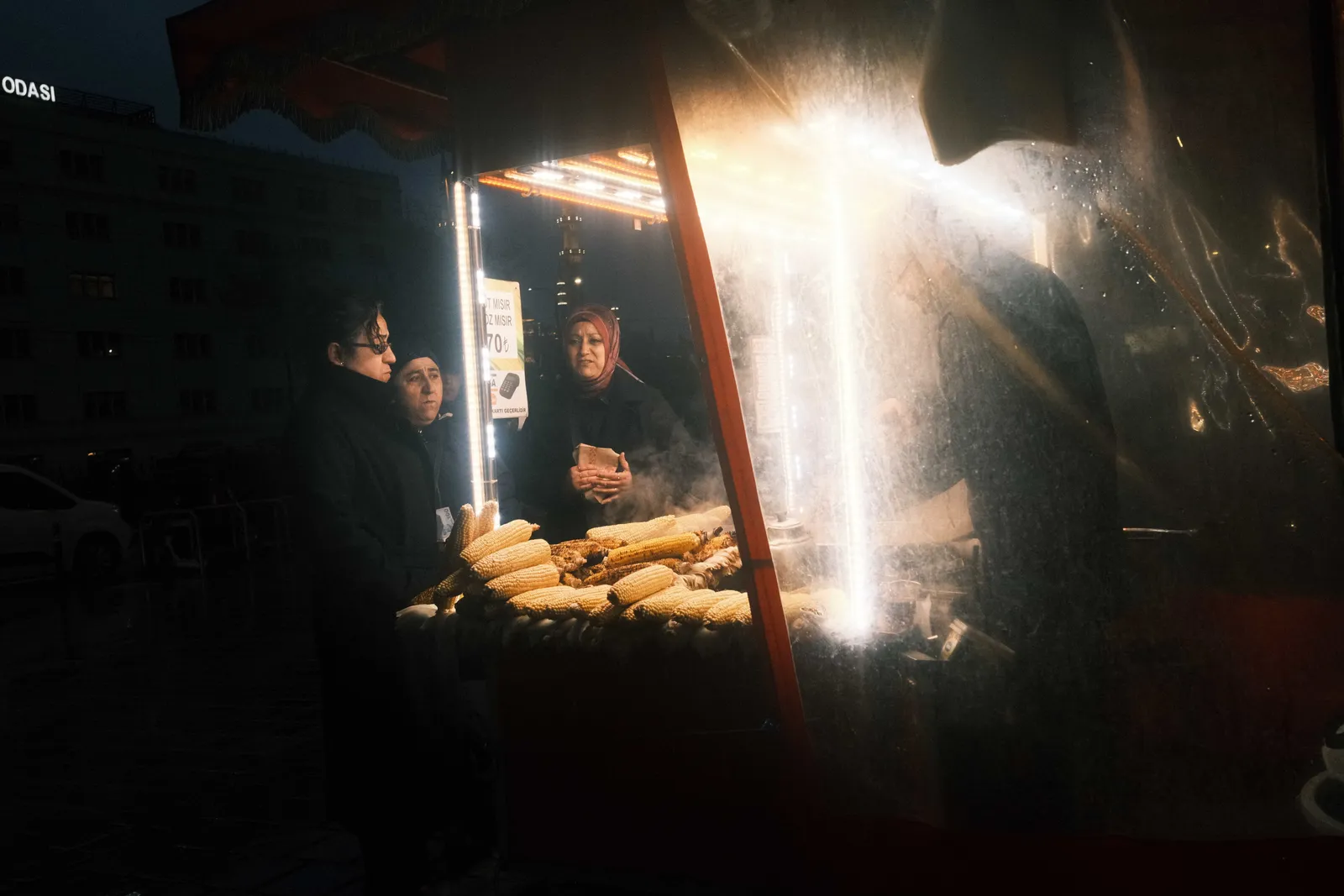
- In Cappadocia's dusty rock valleys, I switched to Grain Noir for dramatic, high-contrast monochrome street and architecture frames.
At the end of a long travel day, I transfer my favorite frames directly to my phone in two minutes while having dinner. If I want to share them on social media, I drop them into Whiteborder Lab for a clean border or analyze the color palette with Grading Lab. If I want a physical souvenir, I print them directly on a portable Canon Selphy CP1500 or turn them into an 8-page travel zine using FotoZine Lab.
Your vacation remains a vacation, not an unpaid post-production shift.
Stills and video in a single project
Travel today is rarely stills-only. Even if you consider yourself primarily a photographer, you will inevitably want to capture the atmosphere of a bustling market or the sound of waves hitting the rocks.
The X-E5 shoots gorgeous 4K video using the same film simulations. As I detailed in my hybrid Fujifilm + DaVinci Resolve workflow, I reserve one custom dial slot for video (Classic Cinema). Switching between 40MP stills and cinematic video is a single flip of the top dial.
And with Blackmagic Design's latest release of DaVinci Resolve 21.1, Fujifilm RAW files are now natively supported on Resolve's dedicated Photo page. If you do shoot RAW on a landmark trip, you can grade both your stills and your timeline footage inside a single application using professional node trees.
My minimalist travel kit
If you are planning your next trip and want to travel light, here is the exact setup that carried me across Sicily, Turkey, and Portugal:
- Camera body: Fujifilm X-E5 (with IBIS for handheld night shots).
- Main lens: Fujifilm XF 23mm f/2.8 R WR pancake (equivalent to 35mm full-frame; weather-sealed, razor sharp).
- Low-light lens (in the sling): Fujifilm XF 35mm f/1.4 R (for night dinners and portraits).
- Filter: K&F Concept Black Diffusion 1/4 (screwed onto the 23mm and left there all summer to bloom harsh midday highlights).
- Power: 2x spare NP-W126S batteries (plus a small USB-C cable to recharge in-camera from any power bank).
- Strap: Hyperion Camera Straps (Black).
If you are hesitating between different bodies, our free Camera Finder tool will help you determine whether the X-E5, X-T50, or an older body like the X-T30 II matches your budget and shooting style.
The bottom line
National Geographic’s recommendation is going to make the Fujifilm X-E5 even harder to find in camera stores. But for once, the mainstream spotlight picked the right tool.
The X-E5 is not a gadget designed to impress gear nerds on paper. It is a photographer's tool built for the reality of the road: light enough to never leave behind, versatile enough to adapt to any light, and capable of delivering finished, beautiful photographs the second your shutter clicks.
Help me keep writing
If these articles are useful to you, have a look at what I make.
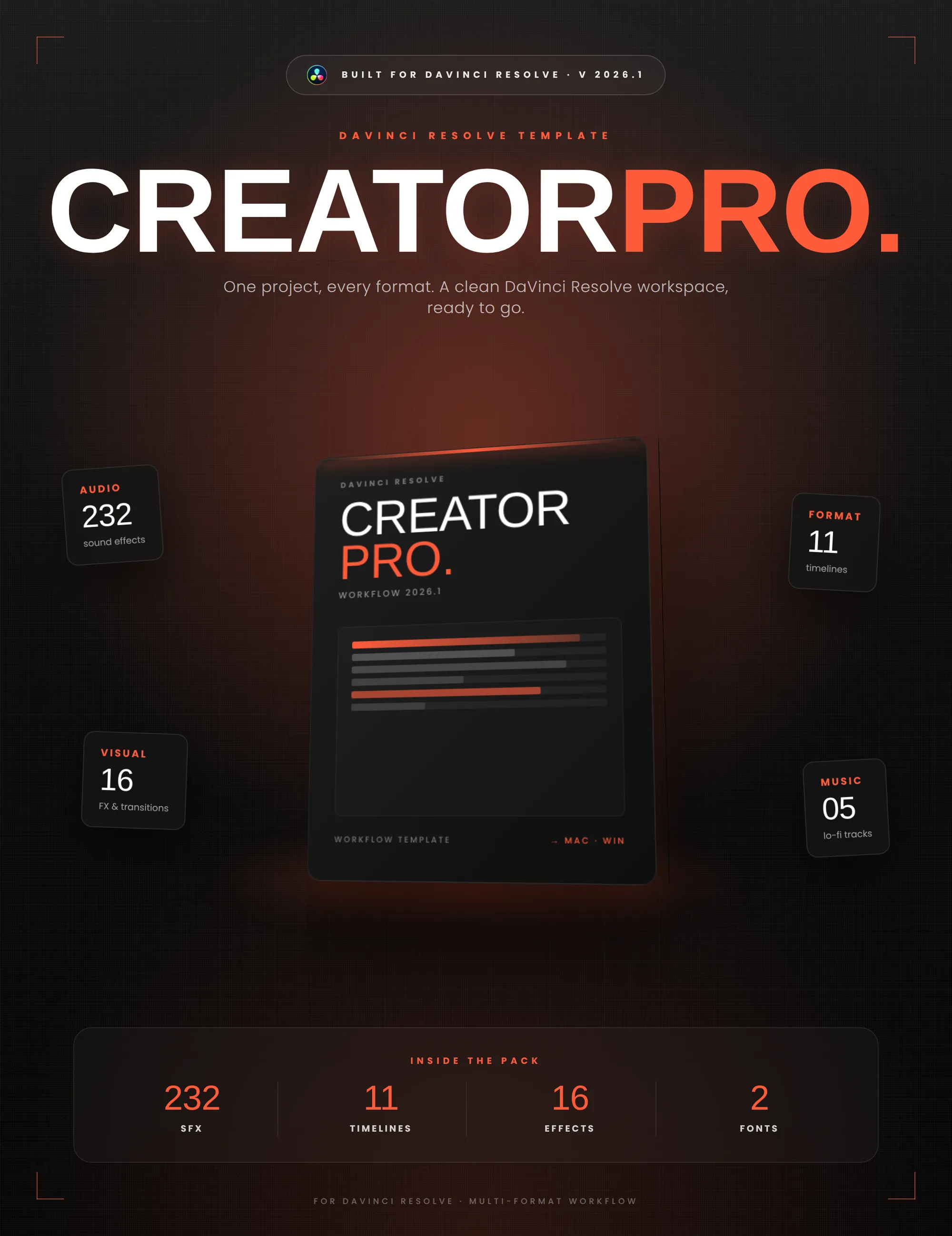
Creator Pro
The ultimate DaVinci Resolve workspace for creators
View plugin — €29.00
VHS Nostalgia
Real VHS & CRT emulation for DaVinci Resolve
View plugin — €39.00
Caption Pro
Automatic word-by-word captions and translation for DaVinci Resolve
View plugin — €29.00
Get the zine
"Absorbed by the algorithm Vol. 1": 33 images shot in Paris, 28 pages, shipped worldwide.